All published articles of this journal are available on ScienceDirect.

Effect of Ceramics Wastes on the Mechanical Properties of Porous Concrete
 iD
Qais Abdulrahman Ali Qais2
Stephen Kayode Aderomose1
iD
Qais Abdulrahman Ali Qais2
Stephen Kayode Aderomose1
Authors Info & Affiliations
Abstract
Aims
This study examined the impacts of leftover ceramic tiles in porous concrete to determine whether ceramic tile was a suitable aggregate for making concrete. This drives the purpose of this research which is to identify the effect of the possible use of waste-broken tiles in solid state and the powdered state on the properties of the porous concrete and how the combination of both crushed tiles as coarse aggregate and fine aggregate could effectively work in the hardened porous concrete.
Background
Without regard for potential reuse or recycling, the amount of ceramic tile in Nigeria has been rising. Due to the limited amount of land, the risk to public health is increased. Finding new landfill-free disposal methods can help to address the rising issue. Continuous reliance on traditional resources for concrete is also causing a shortage of those materials, which raises the cost of construction.
Objective
The physical properties of the crushed waste ceramic tiles and the mechanical characteristics of the concrete with ceramic tile aggregate were examined to meet the goal of this study. And to compare the results of the concrete made with ceramic tiles and those made with regular aggregate.
Methods
To achieve the objectives of this research, a series of laboratory experimental procedures were conducted then numerical calculations were done to derive some properties of the aggregates used in the concrete mix. Broken, trash, and abandoned tiles are the source of waste ceramic tiles. Both fine and coarse natural aggregates were completely replaced. A total of 60 cubes were made and evaluated for compressive strength (fc) at 7, 14, 21, and 28 days using a nominal mix ratio of 1:2:4 and a water-cement ratio of 0.55.
Results
From the series of experiments, it was discovered that the strength of the porous concrete decreased with the increase in the number of ceramic tiles. The results showed that at 28 days the fc was 20.14N/mm2 with 0% ceramic tile coarse aggregate and 14.30N/mm2 at 20% ceramic tile coarse aggregate.
Conclusion
This research concludes that the control sample has higher strength and durability than ceramic tiles and recommends that ceramic tile can be used as an alternative construction material for fine and coarse aggregate. With the addition and increase in the percentage of ceramic tile coarse aggregate, the compressive strength of the concrete decreases. Ceramics tiles in concrete reduced the weight of the porous concrete when compared to the concrete bearing crushed granite.
Other
Though the strength of the porous concrete decreased with the increase in the ceramic tiles, the sustainability aspect of this research must not be overlooked as the concrete is suitable and the use of waste ceramics tiles has a great positive effect on the environment.
1. INTRODUCTION
A concrete mixture made of coarse aggregate, Portland cement, and water that covers a reservoir of stone aggregate and allows for quick water infiltration is referred to as “porous concrete”. The material, also known as porous concrete, no fines concrete, and permeable concrete, is increasingly used in paving contexts for concrete flatwork applications. Porous asphalt, different kinds of grids, and paver systems are all members of a larger family of pervious pavements that also includes porous concrete. Enhanced porosity concrete, porous concrete, Portland cement pervious pavement, and pervious pavement are other names for it. Porous concrete has become more popular, although there is still relatively little real-world experience.
The high permeability of the concrete layer, which is sometimes many times larger than that of the underlying permeable soil layer, allows rainwater to swiftly seep through the top and into the layers below. Porous concrete has void spaces that range from 15% to 22%, as opposed to typical pavements, which have void spaces of three to five percent. Under the permeable surface, there are layers of crushed stone and open-graded gravel. The voids between the stones act as storage for runoff.
In Nigeria, the construction of new infrastructure and rebuilding of deteriorated roads, highways, bridges, seaports, and private and public buildings require huge quantities of crushed rock aggregates. This puts a lot of pressure on the environment as the rocks are obtained solely from natural sources. The scarcity of crushed rock aggregate affects concrete cost; this prompted some researchers in suggesting alternative materials that could be used either as a substitute or as a partial replacement. One material that could be used as a replacement for the crushed rocks from the quarry sites is waste ceramic aggregate. There is extensive availability of waste ceramic tiles found at almost all construction sites in Nigeria [1]. Over a million tonnes of waste tiles are disposed of annually in this world. This waste can be used in sustainable construction. For example, Nigeria produces more than 60 million tonnes of trash per year, with a capacity for waste management of less than 10%, according to the Nigerian Environmental Society (NES). The need to manage these wastes has emerged as one of the most pressing issues of our time, necessitating specific measures aimed at preventing waste generation. For example, the promotion of resource recovery systems (reuse, recycling, and waste-to-energy systems) to exploit the resources contained in the waste, which would otherwise be lost, thereby reducing environmental impact. A million tonnes of these waste products are readily available and thrown away worldwide each year, claims [2]. For effective use of these waste products for construction, they must pass through some stages of recycling.
In the construction of environmentally friendly structures, recycling these wastes into a sustainable building material appears to be a realistic solution for lowering pollution as well as a cheap one. Because of the increased concern for environmental preservation and energy savings with little effect on the economy, researchers have been motivated to explore novel options for coarse aggregates in the Nigerian concrete industry [3]. Numerous industrial waste products, such as fly ash, blast furnace slag, quarry dust, tile, brick, broken glass waste, waste aggregate from tearing down buildings, ceramic insulator waste, etc. have been investigated as prospective substitutes for the conventional components in concrete. Concrete is the most often used building material. Cement and aggregate costs, which are needed to make concrete, have increased as a result. The excessive consumption of aggregate is a result of the widespread use of porous concrete.
For both environmental and financial reasons, porous concrete made using unconventional aggregate is urgently needed. To produce porous concrete, cement and aggregate are essential components that the building industry needs. This will unavoidably result in an ongoing and rising demand for the natural resources utilized in their manufacture. It is important to pay attention to the preservation and reuse of environmental trash. This is because some of these components are biodegradable and properly disposing of such waste products comes at a considerable expense.
Apart from the positive cost of implements in the use of ceramic waste aggregate as coarse aggregates, they are lighter in weight when compared with normally broken stones from the quarry sites and will impact positively on the soil on which the building is founded. Additionally, the environment which would otherwise be destroyed is protected from degradation.
In the ceramics sector, it has been calculated that 20% of the daily production of tile is lost to waste [4]. Currently, there is no recycling of this waste in any way. The ceramic waste is strong, hard, and extremely resistant to forces that can cause it to degrade physically, chemically, and biologically. There is pressure on the ceramic industries to find a solution for its disposal since ceramic waste accumulates every day. In the meantime, the supply of typically crushed stone aggregate is running out quickly, especially in some desert areas of the world [4].
Almost all buildings employ ceramic tiles as major construction materials. These tiles are typically made starting with the basic materials, which are then ground and combined, granulated by spray drying, pressing, fire, and/or polishing and glazing [5]. Waste from the ceramic industry can be turned into practical coarse aggregate. Ceramic waste coarse aggregate has characteristics that are well within the range of the value recommended for porous concrete-making aggregates. The characteristics of coarse aggregate porous concrete made of ceramic tiles are like those of traditional porous concrete. The study [6] claims that because ceramic tile coarse aggregate concrete offers several advantages over other cementitious materials, its adoption has expanded. Given that homogeneous ceramic tiles have characteristics like those of natural coarse aggregates, they can be used as a substitute for natural crushed stones [7].
For structural reasons, recycled porous concrete can be made by partially substituting natural coarse aggregate [8]. Crushed ceramic aggregate can be used to produce light-weight concrete, without affecting strength [4]. Due to its pozzolanic qualities, concrete with ceramic waste powder has a slight loss in strength but gains in durability performance. The findings are encouraging when traditional coarse aggregates are replaced with ceramic coarse aggregates, but they somewhat underperform in terms of water absorption, making ceramic sand a superior alternative [9]. Broken ceramic tiles can substitute standard coarse aggregates (10% and 20%) to some extent without degrading the structure [10].
Researchers have conducted a series of experiments and research on the implementation of waste ceramic tiles in construction especially in the replacement of concrete aggregate to produce concretes with good properties that could serve even better than conventional concrete. According to [11], utilizing tile as a coarse aggregate does not weaken porous concrete. It increases its compressive strength (fc) by up to 30% and greater percentages (up to 40%) have no detrimental effects on fc. Tile samples have been reported to have comparable strengths to one another. The research [12] investigated the possibility of using crushed ceramic tiles as coarse aggregate for porous concrete. The study demonstrates that as compared to those naturally occurring crushed stones, crushed tile had a lower density and a higher water absorption value. The density and compressive strength (+2%) of the porous concrete with 100% crushed tile as the coarse aggregate were lower. According to a study [13], lightweight porous concrete can be made using crushed ceramic aggregate without losing any of its strength. Ceramic tile aggregates can be employed in elements where fc is not a primary requirement, according to research [14].
The use of ceramic waste as coarse aggregate, powder, and filler in cement mortar, concrete, self-compacting concretes, high-strength concrete, and ultra-high-performance concrete has been the subject of numerous studies [15-25]. Many of them investigated how adding ceramic waste to concrete composite reduces both the density and workability of the mixture [26]. The mechanical properties of mortar and concrete that contain ceramic waste have also been examined and assessed by several researchers [16, 27]. Most research found that when natural sand is substituted with ceramic waste up to the ideal percentage, the mechanical strength of concrete is on par with or even better than those containing natural aggregates. The effects of dust, ceramic waste as aggregate (CW), and their mixtures on the creation of concrete were investigated [28]. At 2, 7, and 28 days, they found an increment in fc of approximately 13.53, 16.70, and 2.91 percent, as well as flexural strengths of approximately 23.21, 0.10, and 19.47 percent, respectively.
Mujedu et al. [29] investigated the suitability of broken tiles as coarse aggregates in concrete production and observed that the compressive strength and density are maximum for concrete cubes with 100% crushed granite and minimum when broken tiles content is 100%. It was reported [29] that replacement of crushed granite with 39% to 57% broken tiles content showed satisfactory results.
According to a study [30], coarse aggregates were partially replaced by crushed waste ceramic tiles in the proportion of 0%, 10%, 20%, 30%, and 40%, and superplasticizers as 0.4% and 0.4 water-cement ratios were used taken. At 20%, maximum compressive strength is 49.53, split tensile strength is 3.37, and flexural strength is 7.29, strength start decreasing from 30%. Test for the strength of concrete is performed for 7, 14, and 28 days. The result shows that there is an increase in the strength of concrete to 20%.
The possibility of using crushed tiles as coarse aggregate in concrete is discussed [12]. The results of the tests on bulk, saturated surface dry and apparent specific gravities, bulk unit weight water absorption resistance to abrasion percentage of voids, and grading on two different types of crushed tiles were compared with the results of the tests on standard crushed stone aggregate. In addition, the findings of tests conducted on concrete cylinders while they were subjected to uniaxial compression, split tension, and flexure are also included. The purpose of these tests was to identify the influence that variables of test age had on the strength of concrete, the type of tiles used, and the ratio of the volume of crushed tile to the total volume of coarse aggregate in concrete. The use of broken tiles as coarse aggregates in concrete is encouraged in this recommendation.
The researchers [31] replaced coarse aggregates with waste ceramic tiles. Mix designs of M20, M25, and M30 are made by replacing coarse aggregates in 0%,5%,10%, and 15% for 28 days. At 0% M30, maximum compressive strength is 38.73, at 5% M30, maximum compressive strength is 33.99, at 5% M20, compressive strength is 28.21 is attained.
Using ceramic wastes in concrete has many positive environmental impacts by reducing cement consumption and landfill demand. This also decreases the price of concrete [9]. Some previous studies considered ceramic wastes to be pozzolanic materials [32, 33]. On the other hand, a slight reduction in the mechanical performance of concrete is expected by using ceramic powder in concrete to partially replace cement content, especially with higher replacement percentages.
Ceramic wastes are suitable for use as a partial substitute for coarse aggregates in the manufacture of cement [34]. They might be used in mortars and both structural and non-structural concrete, according to research. In terms of qualities including density, hardness, permeability, and fc, they were discovered to outperform traditional concrete [18, 35].
The depletion of this natural aggregate for use by future generations would result from continued exploitation of this non-renewable resource. The United Nations Sustainable Development Goals will be severely harmed by this growing environmental issue. The use of these waste materials in concrete could reduce waste in the environment as well as helps the environment against pollution [36]. This study investigated the usage of ceramic tiles as concrete aggregate to address these issues. Due to the rapid and significant growth in the number of buildings, the use of ceramic waste tile has continued to rise. Lots of ceramic waste tile is wasted, scrapped, or left over after structural construction. Because these wastes have always been deposited and stacked up at landfills, there are significant disposal issues because the waste is piling up every day. As a result, either fine or coarse aggregate has been employed with these ceramic tiles. However, little research has been done to fill in the gaps regarding the combined use of tiles as fine and coarse aggregate to completely replace conventional aggregates in concrete. The use of recycled materials as aggregates has various benefits from a sustainable perspective. There is a reduction in the amount of landfill space required for disposal, and natural aggregate reserves are not depleted as quickly. The cost of building is extremely expensive due to the constituent materials utilized in construction, the global economic downturn, and market inflationary patterns. By utilizing the trash and lowering the cost of the concrete, using ceramic waste tile as aggregate in the creation of porous concrete materials would help the environment.
To achieve the objectives of this research:
i. Assess the physical properties of the crushed waste ceramic tiles and the mechanical properties of the concrete with partially replaced coarse aggregate by ceramic tile aggregate.
ii. Compare the result of the concrete with ceramic tile aggregate and that of conventional aggregate.
The aim of this research is to the mechanical properties of Porous Concrete containing Ceramics tiles as coarse aggregates must be determined; therefore, this research focuses on assessing the suitability of producing concrete of adequate strength with waste ceramic as partially replaced coarse aggregate for crushed granite stones and determining the best coarse aggregate mix ratio to achieve this strength.
2. MATERIALS AND METHODS OF RESEARCH EXPERIMENT
2.1. Materials for Research
This research work uses experimental methods to achieve the aims and objectives of this study. To conduct the experiments, the materials discussed below were used.
2.2. Ceramic Tiles Coarse Aggregate (CTCA)
The ceramic tile coarse aggregate was produced in the laboratory by manually crushing the waste ceramic tiles into coarse aggregates. The manual procedure involves the use of a hammer and a very hard surface.
2.3. Ceramic Tiles Fine Aggregate (CTFA)
The ceramic tile fine aggregate was from the waste powder of crushed CTCA.
The waste tiles were bought from a construction site in Akure, Ondo State, Nigeria.
Ceramic tile product is a mixture of minerals and clays which is then shaped, and pressed, resulting in a hard surface by firing at temperatures exceeding 2000℉. Color is added to the ceramic tile then, finishes and makes it resistant to odors, bacteria, stains, and scratches.
2.4. Granite Aggregates
The coarse aggregates of crushed granite were gotten from a construction site in Akure, Ondo State, Nigeria.
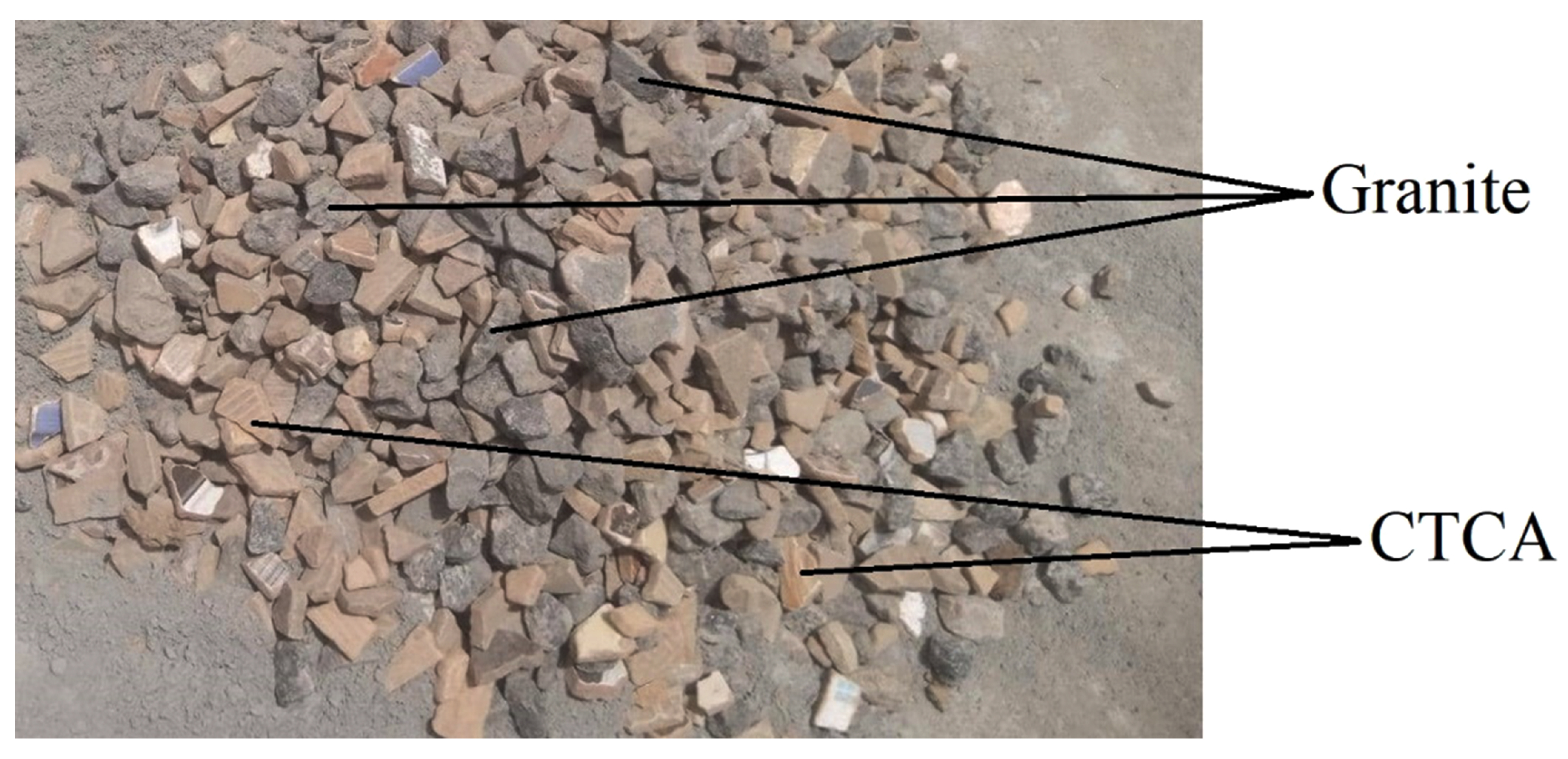
Granite coarse aggregate was used to produce the control specimen while the crushed CTCA was used as coarse aggregate for the sample concrete (Fig. 1).
2.5. Cement
The cement used as the binder for the concrete work was Dangote 3X Grade 42.5R Portland cement and it is conformed to BS 12 [37]. The 3X stands for Xtra strength, Xtra life, and Xtra yield. The Dangote 3X cement was bought from a Building materials shop in Akure, Ondo state Nigeria and manufactured by the Dangote group of companies, in Nigeria. Dangote cement has so many varying properties that are comparable with all the cement types. It recorded the lowest percentage of composition of CaO and the highest percentage of Fe2O3. The SiO2 percentage value is as per the Ordinary Cement of BSI (1978) [35].
The Al2O3 of about one percent composition corresponded slightly with type IV of ASTM (1986) [18]. The MgO and SiO2 values are of type I [38] and its CaO and SO3 percentage composition are of type IV [39]. It has the highest uncombine lime, thus resulting in its low CaO. According to its mineralogical composition (Table 1), its C3S and C3. A corresponded to type I [39], while C2S and C4AF are type IV and type V, of ASTM (1986), respectively. The low value of C4AF was observed because of the substitution of ferric oxide for Alumina and thus following an increase in C3A and a reduction of C4AF. This observation was ascertained as given in analytical form [40]. The high C3A value is reflected in the interval between the setting times of 11.38 minutes. This is an indication of poor workability [41]. It is difficult to ascertain the grade of Dangote cement. It is most likely to be a slag Portland cement. This can only be verified with further investigation [42]. The mineral composition of Dangote 3X Portland cement and its percentages are illustrated in Table 1.
| C3S | C2S | C3A | C4AF | Total Sum (Σ) |
|---|---|---|---|---|
| Percentages (%) | ||||
| 33.33 | 26.47 | 14.33 | 4.77 | 78.9 |
2.7. Experimental Procedures
Preliminary tests were carried out following the appropriate standard to check the quality of the materials to be used for the experiment. The various tests are:
2.7.1. Particle Size Distribution
The sieves were arranged from top to bottom to decrease the aperture sizes with a pan and lid to form a sieving column. The aggregate sample was poured into the sieving column and shaken manually. Sieves were removed starting with the largest aperture sizes, and the sieve was shaken manually, ensuring no material is lost. The retained material was weighed for the sieve with the largest aperture size and its weight was recorded. The same work was carried out for all sieves in the column and their weights were recorded. The screened material that remained in the pan stayed weighed and its weight was recorded, following BS 812-103 [43].
2.7.2. Specific Gravity Test
This is the ratio of the weight of the aggregate dried in an oven at 100-110°C for 24 hours to the weight of the water occupying a volume equal to that of the solid, including the impermeable pores. The latter weight was determined using a vessel (pycnometer) which can be accurately filled with water to a specific volume. The apparent specific gravity of aggregate depends on the specific gravity of the minerals of which the aggregate is composed, the number of voids, grading, shape, texture, and moisture content. Approximately 2kg of a representative sample of aggregate passing through 20mm retained on a 5mm test sieve was taken and the sample was carefully washed with water to remove dust on the surface of the grains. This was followed by soaking in water at 22 ± 3 °C for 24 hours. The specimen was removed from the water, shaken off, and rolled in a large absorbent cloth until all the visible films of water were removed. Large particles may wipe individually. The sample remains weighed and recorded as WSD. The sample was then placed in a wire basket, immersed in water at room temperature, and tapped to remove entrapped air on the surface and between the grains and weighed the sample while immersed. This weight is recorded as WW. The sample is later removed from the water; dried in a drying oven to a constant weight at a temperature of 105-110°C and cooled to room temperature, weighed, and recorded [44] as Eq. (1).

where W1 is the mass of empty density bottle; W2 is the mass of bottle + dry soil; W3 is the mass of bottle + soil + Liquid; W4 is the mass of bottle + liquid
2.7.3. Bulk Density
The weight of aggregate held in the box of unit volume (V) when fill or compacted under defined conditions. Aggregate bulk density is usually specified as loose or compacted. The bulk density (see Eq. 2) was determined based on the saturated dry surface, the box weighed empty after cleaning as W was then filled with aggregate for three different layers and tamped 25 times with a tamping rod for compaction. The top of the container was level and weighed again as W1. The test was carried out for aggregates, and the weights were recorded. This could satisfy the requirement of BS 812-108 [43].

where W is the weight of the empty mold; W1 is the weight of empty mold + wet sample; V= volume of the sample.
2.7.4. Aggregate Impact Value Test
The aggregate samples were dried in an oven at 105°C for 4 hours and allowed to cool. The cylindrical cup was filled with aggregate samples in three layers. Each layer was tamped 25 times with a standard rammer and the weight of the filled was recorded. A hammer of 13.5-14kg was allowed to drop on the test sample at intervals of not less than 1 second from a height of 380 mm. The weight of the fraction passing 2.36mm sieve formed because of the impacts. The ratios of the weight of fines formed to the total weight of the aggregate sample were expressed in percentages.
2.7.5. Aggregate Crushing Value Test
The aggregate was sieved through 2.36 mm sieves. The weight before the Test recorded as Wt1. The aggregate dries in an oven at a temperature of 105°C for 4 hours and allows cooling. The test sample was placed in three layers in a cylinder each layer being subjected to 25 strokes of the tamping rod. The surface of the aggregate was then leveled, and the plunger was inserted and ensured it rested horizontally on the surface of the aggregates. The apparatus with the test sample and plunger was then placed in position between the platens of the testing machine and loaded at a uniform rate to the required load and the crushing load was 400KN. After loading, the crushed material was removed from the cylinder and sieved through a 2.36 mm sieve. The fraction passing the 2.36 mm sieve was then weighed and recorded as Wt following BS 812-110 [45]. The aggregate crushing value is expressed in Eq. (3).

2.8. Concrete Production
To produce concrete specimens, trial mixes were first produced to check whether the aggregates or cement selected for use would behave as anticipated. Adjustments may be made to the original mix proportions if necessary. The adjustment will differ according to how much the results of the trial mixes differ from the mix proportion. A concrete paste mix proportion of 1:2:4 was produced and cast into 150mm x 150mm x 150mm metallic cube molds which were used for the trial and used to lower the amount of water required. Four different water-cement ratios were used, that is 0.4, 0.45, 0.5, and 0.55, after which the optimum (0.55) was chosen. The final mix production entails the use of the nominal mix method of concrete proportioning. A nominal mix proportion of 1:2:4 and a water-cement ratio of 0.55 were used to produce concrete specimens. The quantity of material was computed using the absolute volume method. A total of 60 cubes were cast and cured for the ages of 7, 14, 21, and 28 days. This was carried out in the concrete technology laboratory, Department of Civil Engineering Federal University of Technology, Akure.
At the fresh concrete paste stage, the concrete samples were tested for workability using compacting factor and slump tests/methods. The test was carried out per the relevant standard such as BS 1881-102 [46].
The interior surfaces of the mold should be cleaned and lubricated to avoid fresh concrete adhering to the surfaces before measuring the slump of fresh concrete mix. The mold was firmly kept in place on the base plate. Three layers of fresh concrete were then added to the cone, and each layer was compacted with 25 strokes of the tamping rod. After the mold had been filled, the top surface was removed using the tamping rod's rolling motion. The cone will be gently and carefully lifted after filling, and once the mold has been removed, the drop of the unsupported concrete will be measured and noted.
The fresh concrete paste was added to the top of the upper hopper to test the concrete's compactness. The trap door was then unlocked, letting the concrete drop into the bottom hopper. The bottom hopper's trap door was opened, allowing the concrete to fall into the cylinder. The cylinder's top was then smoothed and hammered off with a trowel. The cylinder was weighed as W1 and the value recorded. The cylinder was emptied and refilled with concrete from the same mix in three layers and tamped each layer 25 times to obtain full compaction. The top of the concrete in the cylinder was carefully struck off to level with the cylinder. The cylinder was then weighed, and the value was recorded as W2. The compacting factor (W) is illustrated in Eq. (4).

The concrete specimens were cast in iron mold cubes of dimensions 150 x 150 x 150 mm. The test specimens in the molds were covered with wet rags and stored in the laboratory at a temperature of 20 ± 5 °C and relative air humidity (95 ± 5) %. After 24 hours, the hardened concrete specimens were demolded and kept in a water curing tank at room temperature 20±5 °C for curing and protecting against vibration, dehydration, and shock.
A total of 60 hardened cubes (12 cubes for control specimens and 48 cubes samples) with 150 mm x 150 mm x 150 mm dimensions of 5 different series were produced. The cubes were tested for compression at 7, 14, 21, and 28 days of curing age. From each of the series, 3 cubes were tested for compressive strength on each crushing day. The compression tests were conducted on a universal hydraulic press of up to 1500 kN at the compression.
3. EXPERIMENTAL RESULTS
Utilizing percentage and mean, the outcomes of the tests that were conducted were analyzed. The arithmetic mean, which is the sum of all the numbers divided by the total number of numbers in the collection, represents the central tendency of the data. The strength of the cubes for the sample concrete and control specimen for a given day was added, and the number of cubes was divided by the mean to assess the fc result at various curing periods.
The percentage was also used to analyze the result of water absorption by calculating the percentage of water absorption for the entire concrete specimen and the percentage of weight loss.
The results presented in this research paper were based on the tests carried out to assess the physical and mechanical properties of concrete made with ceramic waste as aggregate. The result includes those of the physical and mechanical properties of the aggregate used and the mechanical and physical properties of the concrete made with the aggregates.
3.1. Particle Size Distribution
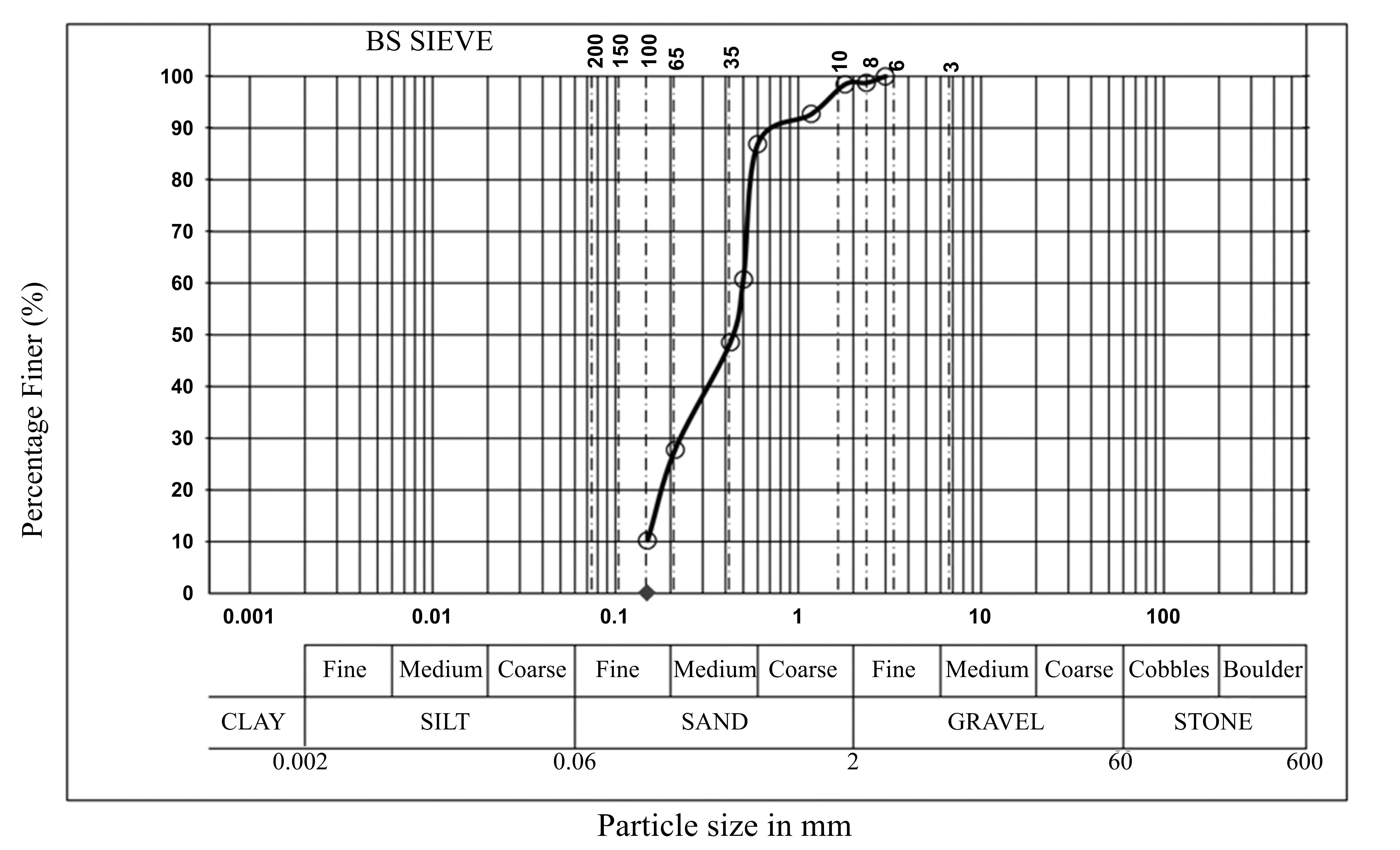
The physical properties of ceramic waste tile aggregate and conventional aggregates are presented in Table 2 and Fig. (2).
| Sieve Sizes | Weight of Sieve (g) | Weight of Sieve + Sample (g) | Weight Retained (g) | % Weight Retained | % Passing |
|---|---|---|---|---|---|
| 3.00 | 244.6 | - | - | - | 100 |
| 2.36 | 480.3 | 482.8 | 2.50 | 1.25 | 98.75 |
| 1.80 | 370.0 | 370.6 | 0.60 | 0.30 | 98.46 |
| 1.18 | 360.3 | 371.8 | 11.50 | 5.75 | 92.70 |
| 0.600µm | 370.1 | 381.7 | 11.60 | 5.80 | 86.90 |
| 0.500µm | 338.3 | 390.8 | 52.50 | 26.25 | 60.65 |
| 0.425µm | 348.2 | 372.4 | 24.20 | 12.10 | 48.55 |
| 0.212µmb | 355.4 | 408.8 | 53.40 | 26.70 | 21.85 |
| 0.150µm | 344.3 | 367.5 | 23.20 | 11.60 | 10.25 |
| 0.075µm | 322.7 | 337.3 | 14.60 | 7.30 | 2.95 |
| Pan | 287.7 | 293.6 | 5.90 | 2.95 | _ |
| - | - | - | 200g | - | - |
The results of a grain size analysis are usually presented in the form of a distribution curve; this curve is obtained by plotting particle diameter against the percentage finer. The uniformity of the aggregate sample can be expressed by the uniformity coefficient (Eq. 5), which is the ratio of D60 to D10, where D60 is the soil diameter of which 60% of the aggregate sample is the finer and D10 is the corresponding value at 10% Fine and the coefficient of curvature (Eq. 6) is calculated. According to BS 812 part 1:1975 [47], the percentage of the fine aggregate passing the sieve 75 microns should be less than 30% and this shows that the value of the percentage of the fine aggregate passing through the sieve 75 microns for the research is below the range which shows that the material is excellent. According to the research carried out by me, the coefficient of uniformity was 1.36 which shows that the material is poorly graded, and the coefficient of curvature was 0.87 which also shows that the material is poorly graded according to [47].


Solving Eq. (5) by substituting D60 and D10 with the individual values,
 while solving Eq. (6), D30 is substituted with the value 0.12, then
 .
.
3.2. Specific Gravity, Bulk Density of Aggregate
Table 3 shows the specific gravity and bulk density of the coarse aggregate. The specific gravity of coarse aggregates (ceramic tile and Granite) was found to be 2.63 and 2.67 and the specific gravity of most soils lies within the range of 2.65 to 2.85 and which shows that the material used for the specific gravity is excellent. The bulk density of both the ceramic tile and coarse aggregate (Granite) weight aggregates is between 2301 and 2419 kg/m3 (for bulk density). The weight of the coarse aggregate (Granite) is more than the ceramic tile object.
Table 3.
| Property | Ceramic (Coarse) | Coarse Aggregate (Granite) |
|---|---|---|
| Specific Gravity (Gs) | 2.63 | 2.67 |
3.3. Mechanical Properties of Aggregates
3.3.1. Aggregate Crushing Value
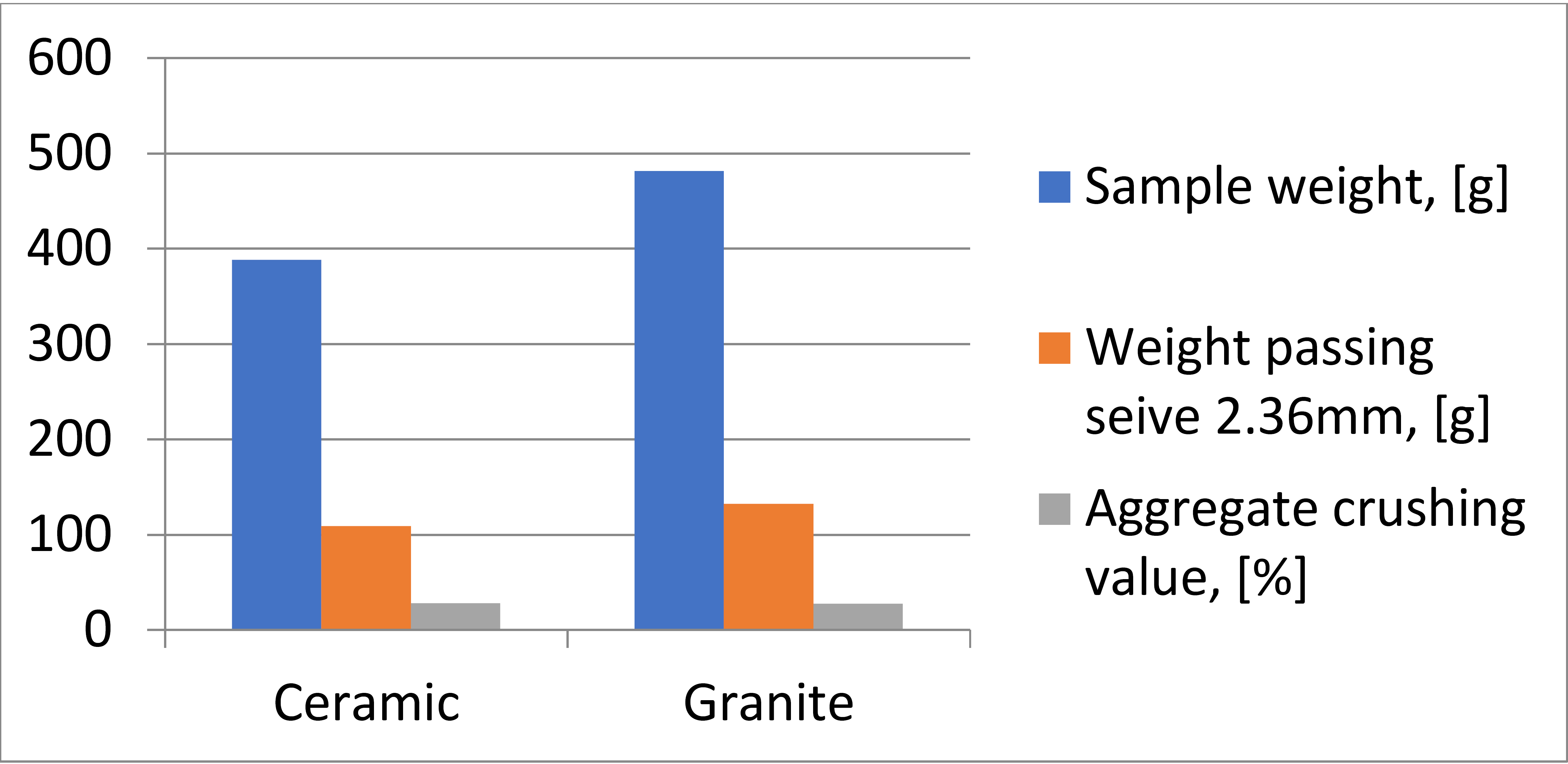
Table 4 and Figure 3 show the result of the crushing value test of ceramic tile and granite aggregate, and the crushing load was 400 kN. The values of the granite and ceramic tile aggregate that passed through the sieve 2.36mm were 132.41g and 109.0g. The percentage of the aggregate crushing value for ceramic tile aggregate was found to be 28.06% while the aggregate crushing value for granite aggregate was 27.50%. Though the granite aggregate was found to have a higher ability to resist crushing than the ceramic aggregate, both still fall within the range of aggregate crushing value (27% to 31%). According to BS 812 part 110: 1990 [45], the percentage of the aggregate crushing value should fall within the range of 27% to 31% and which is within the range.
| Item | Ceramic | Granite |
|---|---|---|
| Sample Weight | 388.5g | 481.50g |
| Weight passing sieve 2.36mm | 109.0g | 132.41g |
| Aggregate crushing value (%) | 28.06% | 27.50% |
3.3.2. Aggregate Impact Value
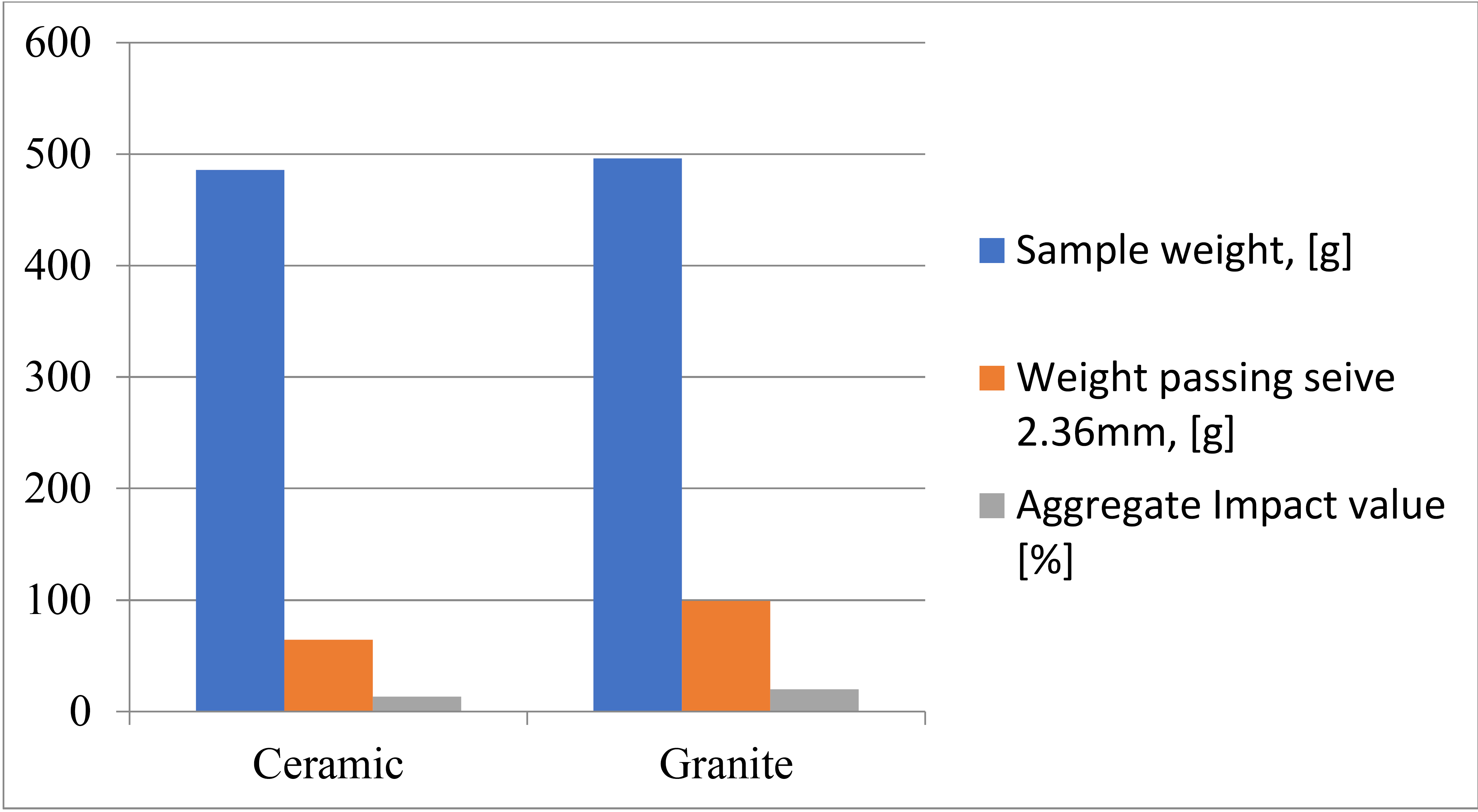
Table 5 and Figure 4 present the results of ceramic tile and granite aggregate impact value. The weight of aggregate passing the 2.36mm sieve was found to be 99.26g (granite aggregate) and 64.50g (ceramic waste aggregate). The percentage of aggregate impact value for granite and ceramic waste tile aggregate was found to be 20% and 13.27% respectively which indicates that ceramic aggregate is more resistant to impact than granite aggregate. According to BS 812 part 112: 1990 [43], the percentage of the aggregate impact value should fall within the range of 17% to 21% according to the research carried out by me both fall within the range.
| Item | Ceramics | Granite |
|---|---|---|
| Sample Weight | 486.00g | 496.30g |
| Weight passing sieve 2.36mm | 64.50g | 99.26g |
| Aggregate Impact value (%) | 13.27% | 20% |
3.4. Fresh Concrete
3.4.1. Workability
Workability, which is the amount of productive work necessary to achieve full compaction, was controlled using a slump test. The slump test is frequently used in site work to identify changes in the consistency of a mixture of specified proportions, but it does not directly quantify workability. A method of evaluating the consistency of new concrete is the slump test.
| S/N | % of CTCA | W/C | Slump Height (mm) | Air Entrainment | Weight of Fully Compacted Concrete | Weight of Partially Compacted Concrete | Compacting Factor | |
|---|---|---|---|---|---|---|---|---|
| Pressure (Bar) | Void (%) | |||||||
| 1. | 0% | 0.60 | 30 | 1.5 | 2.00 | 18.00 | 17.50 | 0.97 |
| 2. | 5% | 0.60 | 35 | 1.5 | 1.50 | 17.80 | 17.40 | 0.98 |
| 3. | 10% | 0.60 | 30 | 1.5 | 2.00 | 18.00 | 17.60 | 0.98 |
| 4. | 15% | 0.55 | 40 | 1.5 | 1.50 | 17.90 | 17.60 | 0.98 |
| 5. | 20% | 0.50 | 40 | 1.5 | 1.50 | 18.00 | 17.00 | 0.94 |
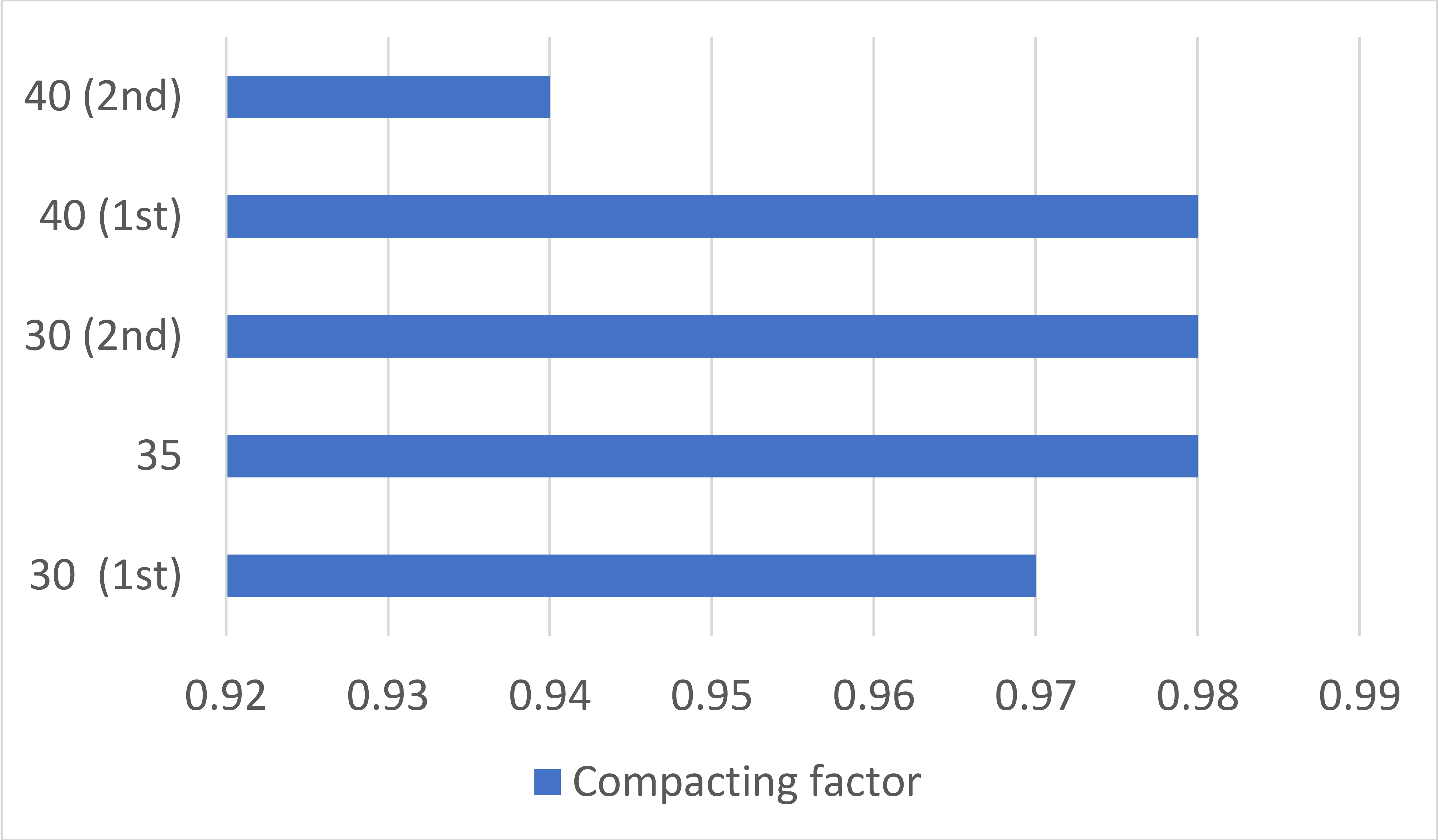
Figure 5 and Table 6 show the relationship between the slump and the concrete made with ceramic waste tiles and the control concrete. The control concrete has a slump of 30mm while ceramic waste tile concrete has a slump of 40mm. This gives an indication of the water absorption and slightly elongated nature of the ceramic waste aggregate, which affect the workability of the concrete. The porous nature of ceramic waste aggregates results in high water absorption hence if the aggregate is used dry at mixing time, it will rapidly absorb water leading to harsh mixes with very low workability. Aggregates should be brought to a saturated surface dry condition before the mixing process by the addition of the required amount of water according to BS 1881:part102:1983.
Also, Figure 5 and Table 6 present the results of compacting factor test of control and ceramic tile concrete. The result of the compacting factor test of concrete which bears 0% CTCA was 0.97 while the concrete with 20% CTCA was 0.94. The compacting factor shows that control concrete is more workable than ceramic waste concrete. It was found that both the slump test and compacting factor for both the concrete made with ceramic tile and the control concrete shows that, the degree of workability was very low. Therefore, this falls within the range specified by BS 1881:part 103: 1983 [48].
3.5. Hardened Properties of Concrete
3.5.1. Compressive Strength
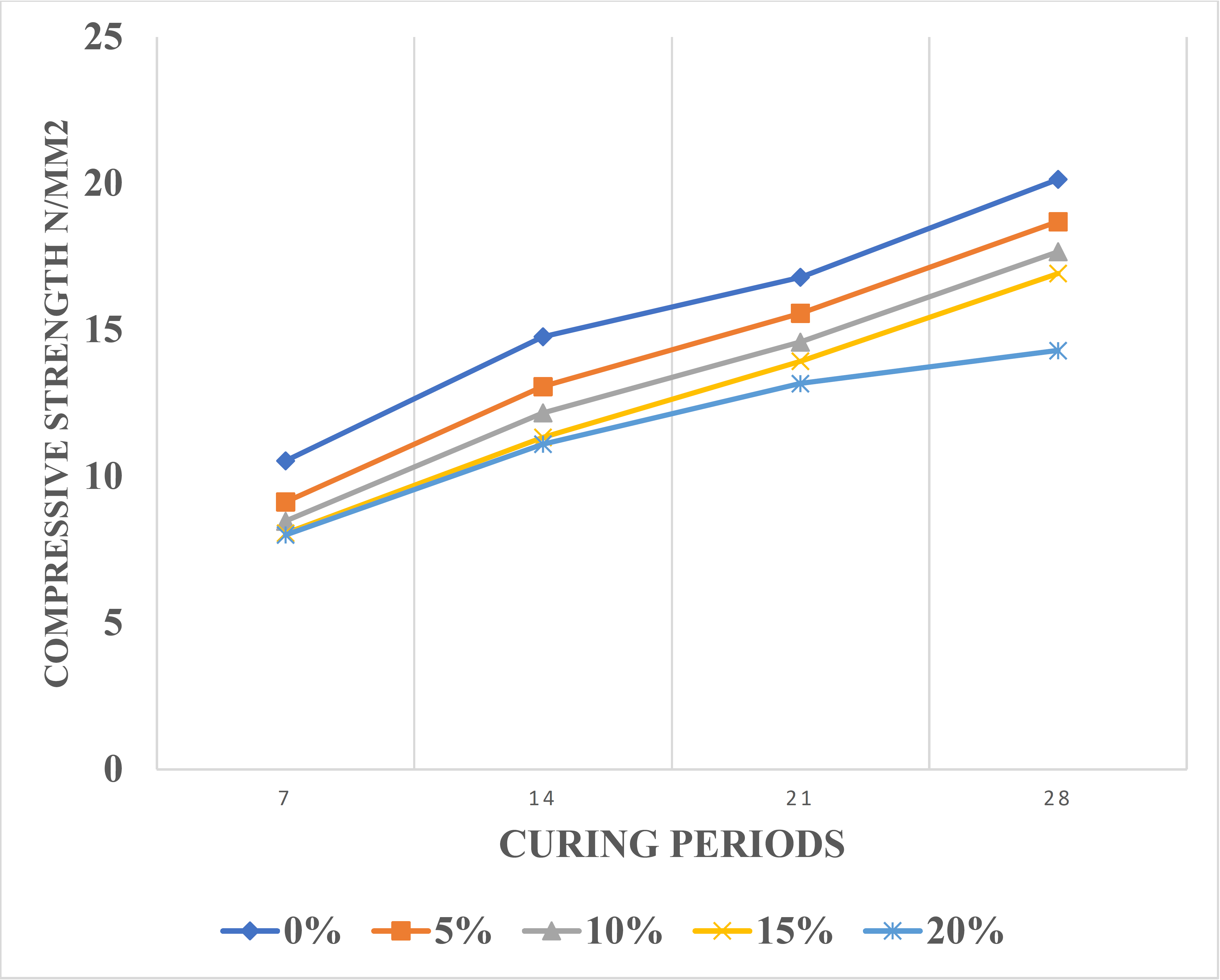
Figure 6 and Table 7 show the compressive strength of concrete specimens cured in water at the 7, 14, 21, and 28 days of the curing period. Also, the relationship between compressive strength and curing age (days) is represented. Table 7 shows the compressive strength of ceramic tile concrete for each of the four curing periods is higher than the control concrete. Comparing the compressive strength of both ceramic tile and control concrete at day 28, it was discovered that the concrete with 100% granite i.e. 0% CTCA obtained the maximum compressive strength of 20.14 N/mm2 while the concrete bearing 20% CTCA obtained the lowest compressive strength of 14.30 N/mm2.
| CTCA % | Curing Periods | |||
|---|---|---|---|---|
| 7 Days | 14 Days | 21 Days | 28 Days | |
| Comprehensive Strength (N/mm2) | ||||
| 0% | 10.53 | 14.77 | 16.80 | 20.14 |
| 5% | 9.13 | 13.07 | 15.57 | 18.70 |
| 10% | 8.47 | 12.17 | 14.59 | 17.67 |
| 15% | 8.06 | 11.33 | 13.93 | 16.93 |
| 20% | 8.00 | 11.10 | 13.17 | 14.30 |
The strength decreased by approximately 29%. As the percentage of CTCA increases, the compressive strength decreases. About the concrete with 0% CTCA, the compressive strength of concrete with 5% decreased by approximately 7.1% while with 10% CTCA, it decreased by 12.3% and the concrete with 15% CTCA decreased by approximately 15.9%. The results shown in Table 7 are the mean of 3 compressive strength cubes at various curing ages and percentages.
4. DISCUSSION
The use of waste ceramic tiles in concrete is a headway to sustainable construction. This practice will reduce the environmental degradation caused by mining and quarrying of rocks and stones which may lead to many hazards that affect lives and properties. In construction, there will often be broken tiles during installation of tiles and because construction works are on the high increase, the quantity of waste broken tiles are in high increasing, at the same time, the number of coarse aggregates that will be needed in concrete will be on the increase. Instead of depending on one or a few sources of coarse aggregates which are not sustainable, it is advisable to utilize these waste ceramic tiles as partial or full replacement of the natural coarse aggregates.
From the series of research works reviewed, the use of waste ceramic tiles in concrete has achieved a recommendable result in the strength of the concrete and at the same time serving as a sustainable aggregate for concrete. This study showed that an increase in the percentages of crushed waste ceramic tiles above a certain limit in the concrete caused a decrease in the compressive strength of the concrete. This confirms what research [30, 31, 34] among others showed, where their studies showed that the use of waste ceramic tiles is suitable at a specific percentage.
Most research works studied the replacement of crushed stones, and granites with waste ceramic tiles but very limited research studies have compared the strength that could be gotten when waste ceramic tiles are mixed with bamboo chips, chipped rubber, and expanded clay. An in-depth study should also be conducted on the effect of high temperature, and acid on waste ceramic tiles.
Most research used other types as fine aggregates while the partial or total replacement of aggregates was in the coarse aggregates. Hence this research investigated the complete utilization of crushed waste ceramic tiles as fine aggregate and partially replaced the coarse aggregate with the broken waste ceramic tiles in the concrete in varying percentages different from the a.
CONCLUSION
This study was conducted on the assessment of the properties of concrete made with ceramic waste tile as both fine and coarse aggregates with more emphasis on coarse aggregate. The concrete sample made with aggregates was tested and compared for workability using slump and compacting factor tests, and compressive strength. From the experimental results of this study, it was discovered that;
The concrete ceramic waste tile has a higher slump height at 15% and 20% while 5%, 10%, and 15% for compacting factor than control concrete.
In terms of compressive strength, the control concrete has higher compressive strength (20.14N/mm2) than the concrete from ceramic waste tiles (14.30 N/mm2) at 28 days respectively. The ceramic waste tile has an aggregate crushing value higher than the control aggregate and the control aggregate has an aggregate impact value higher than the ceramic tile. The specific gravity of coarse aggregate is higher than the specific gravity of ceramic waste tiles.
Based on the experimental results obtained from this study, observations, and analysis on the assessment of the properties of concrete made with ceramic waste tile aggregate. The following conclusions are drawn.
Based on the research carried out the ceramic waste tile and coarse aggregate were found to have a bulk density of 2273 and 2419 kg/m3, and specific gravity of 2.63 and 2.67 respectively, a crushing value (ceramic waste tiles) of 28.06% and crushing value (Granite) of 27.50%, and an impact value (Ceramic waste tiles) of 13.27% and impact value (Granite) of 20%. These values are within the range of standards.
The nominal mix ratio adopted was 1:2:4 with a water-cement ratio of 0.55. The compressive strength for the ceramic waste tile concrete at 28 days of curing age was 14.30N/mm2 while that of control concrete was 20.14N/mm2. Therefore, the nominal mix ratio used was suitable.
The mechanical and physical performance, in terms of compressive and slump tests, indicated that the use of ceramic waste tile as aggregate for concrete is suitable.
Based on analysis of the results obtained Conventional Concrete (Granite) has higher strength and durability compared to that ceramic waste tiles.