All published articles of this journal are available on ScienceDirect.

Rehabilitation of Flexible and Rigid Pavements: A Review
 iD
AI El-Hattab1
iD
A Mohamdy2
AA Elsharkawy1
iD
iD
AI El-Hattab1
iD
A Mohamdy2
AA Elsharkawy1
iD
Authors Info & Affiliations
Abstract
Road rehabilitation is crucial for maintaining infrastructure, supporting mobility, and facilitating economic activity. This study explores the rehabilitation of flexible and rigid pavement using asphalt and concrete overlays. An initial set of 190 articles was retrieved from Scopus and analyzed using VOSviewer to generate bibliometric networks, which exhibited fragmented collaboration and distinct thematic clusters. After two-stage screening, 34 articles were selected for in-depth analysis based on three key parameters: Equivalent Uniform Annual Cost (EUAC), target service life, and International Roughness Index (IRI). The qualitative analysis revealed a skewed distribution of studies regarding rigid pavement overlays and unpredictable IRI results as a performance metric. Welch's t-test was used to statistically compare the parameters. The results showed no significant difference between overlay types except for EUAC, which statistically favored flexible pavement (P < 0.01). This study is the first to integrate bibliometric and statistical analyses to evaluate overlay performance based on these parameters. It provides both a structural overview of the research field and a performance-based comparison of overlay strategies. By combining bibliometric and statistical analysis, this approach offers both a structural overview of the literature and a performance-based comparison, offering valuable insights and guiding future research priorities.
1. INTRODUCTION
Road pavement is an essential construction industry that connects the world. Unfortunately, it can deteriorate due to aging, weather conditions, and traffic. Therefore, the existing road pavement must be continually rehabilitated to sustain the required service level longer than unmaintained roads [1]. Road rehabilitation aims to address the shortcomings in existing pavements by enhancing, fortifying, and restoring their properties. The maintenance of any system is to reach an acceptable state of technical and administrative function [2]. Maintaining roads can enhance safety, increase comfort, save public funds, and reduce the operating costs of cars and vehicles. Urbanization and technological advancements have led to an increase in traffic volume. Therefore, it is not just about rehabilitating pavement networks but also about managing them effectively. Road rehabilitation techniques have been central in developing the Architectural, Engineering, and Construction (AEC) industry. These treatment techniques include restoration, resurfacing, recycling, and reconstruction [3]. Firstly, restoration treatment refers to a series of one or more actions aimed at repairing existing damage and extending the target service life of the pavement without increasing its structural strength. Secondly, resurfacing treatment prolongs the remaining lifespan of the pavement by either enhancing the structural capacity through pre-overly repair and recycling or rectifying functional shortcomings. However, it does not augment the structural strength of the pavement. Recycling treatment, in addition, includes the removal of pavement materials for reuse in resurfacing or reconstruction. Finally, reconstruction treatment pertains to removing and replacing most pavement layers, including asphalt, concrete, and occasionally the base and subbase layers, in conjunction with the remediation of the subgrade and drainage. It may also involve potential geometric modifications [4]. However, significant gaps in the literature remain to be addressed, and future research directions are needed to further advance the field.
Various research studies have extensively examined road rehabilitation in construction. For example, researchers have developed a systematic Pavement Management System (PMS) approach for selecting maintenance and rehabilitation strategies by forecasting pavement condition [5]. Similarly, Sanchez-Silva et al. (2005) [6] proposed a model to determine the optimal design for flexible pavement and to consider the future cost of rehabilitation; however, it does not account for the physical impacts of this rehabilitation. Another study used a reliability-based model to generate optimal strategies for pavement design and rehabilitation [7]. The results of this research depicted the fatigue damage of pavement performance; nevertheless, they did not associate it with user cost. Abaza and Murad (2009) addressed this limitation by introducing an optimized life-cycle model for flexible pavement. This model incorporates the user cost in the maintenance strategy. Other researchers have focused on applying the decision-tree approach and developing pavement management systems at the project level to identify and analyze optimal maintenance strategies [8].
2. LITERATURE REVIEW
Nowadays, road pavement is often considered one of the most important aspects of a nation, as it links cities. Road pavement classification can be divided into rigid, flexible, and semi-rigid pavements [9]. Rigid pavement uses a stiff, rigid layer such as reinforced concrete or cement concrete as its primary structural component in road construction. In flexible pavement, the stress from vehicles is typically distributed to the underlying layer through the interaction of aggregate particles, often referred to as grain-to-grain contact. Furthermore, flexible pavements are usually composed of several layers, each with a specific purpose in the pavement structure. Lastly, in semi-rigid pavements, the limitations of conventional pavements were overcome by combining the characteristics of both flexible and rigid pavements, such as asphalt concrete (flexible) and cement concrete (rigid) pavements [10].
This research will focus on road rehabilitation of rigid and flexible pavements within the construction sector. However, there are other rehabilitation techniques, such as full-depth reclamation, chemical stabilization, and the use of alternative, sustainable materials, such as recycled asphalt or geopolymer concrete. This research primarily focuses on asphalt and concrete overlays. This decision is driven by the widespread use of overlay techniques in real-world pavement rehabilitation and the availability of consistent data across different performance indicators. The limited scope enables more detailed bibliometric and statistical analysis of overlay performance indicators, such as cost, time, and quality, across both flexible and rigid pavement systems. Several studies have even explored asphalt-free solutions, such as stamp sand combined with Acrylonitrile Styrene Acrylate (ASA) plastic waste, which offers potential as an alternative surface layer in low-traffic road applications, as cited in Jin et al. (2022) [11].
Various researchers have explored the topic of road rehabilitation for rigid and flexible pavements. Studies have been conducted to restore runways at multiple airports, including Houston, Oakland, Sarasota Bradenton, and Zurich [12-16]. Rehabilitation of runways is a challenging task, as it requires meticulous planning, rapid execution, and collaboration among multiple parties. Other studies have focused on rehabilitating roadways in cities such as Washington, Nebraska, and Auckland, as well as in countries like Korea, Hungary, China, and Vietnam [17-24]. Some studies have concentrated on rehabilitating highways, which often present significant challenges in countries such as the USA, Belgium, China, Canada, and South Korea [25-33]. These studies also explored the use of asphalt or concrete overlays to address pavement deterioration.
Furthermore, difficulties with rigid and flexible pavement have been identified through the creation of models in various studies. For example, Ali Pasha et al. (2020) introduced a hybrid fuzzy multi-attribute decision-making model for choosing the type of road pavement [34]. Similarly, Ali et al. (2009) developed a finite element model to analyze pavement rehabilitation methods, specifically focusing on rutting in urban pavements [35]. Another research study [36] developed a prediction model to assess the roughness of network-level pavement to suggest appropriate rehabilitation methods. This research has two primary goals. The first objective is to provide a literature review of existing research and to examine the current state of knowledge on rehabilitation methods for rigid and flexible pavements in the road industry, identifying gaps and suggesting directions for future work. The literature has been evaluated using bibliometric analysis. Secondly, a qualitative and statistical analysis of previous studies will be conducted. This viewpoint is essential today because there is a pressing need for a comprehensive evaluation of road pavement rehabilitation. Thus, the results of this research are anticipated to contribute to the existing knowledge of road rehabilitation and inspire future research in this crucial field. This research also underscores the advantages and limitations of flexible and rigid pavement studies.
The main objectives of this paper are to present a literature synthesis and examine the current state of research on road rehabilitation in rigid and flexible pavements using asphalt or concrete overlays, identifying knowledge gaps and directions for future work. Additionally, rigid and flexible pavements are compared statistically to determine whether significant differences exist between them based on three key parameters: total annual cost (EUAC), target service life, and international roughness index (IRI). These parameters were selected because numerous factors influence the choice of pavement type. Similarly, the selection stand-off is continuous in the road rehabilitation and maintenance phase. Therefore, this paper will focus on three main pavement rehabilitation parameters: the total cost of road per year (EUAC), target service life, and international roughness index (IRI). This paper addresses a gap in studies comparing flexible and rigid pavement in road rehabilitation. Thus, this paper's findings will contribute to the current state of research in road rehabilitation. This paper also highlights the strengths and weaknesses of studies on road rehabilitation.
This research paper focuses on studies conducted between 2000 and 2024, as prior research on road rehabilitation difficulties was limited before this period. The paper then used VOSviewer software to create and visualize bibliometric networks of the collected studies. Subsequently, further eyeballing and reviewing the collected literature resulted in a refined, more minor literature. Then, qualitative and statistical analyses were conducted on the refined literature. The qualitative study was evaluated based on the total cost per year (EUAC), target service life, and International Roughness Index (IRI). Those parameters were chosen because they are the main pillars of every construction project. After that, those parameters were examined statistically to determine whether there was statistical significance within and between flexible and rigid pavements. After that, the paper's main findings are displayed, followed by a detailed conclusion.
3. METHODOLOGY
3.1. Data Source and Search Strategy
This review focused on studies related to road rehabilitation using overlays for both rigid and flexible pavements, published between 2000 and 2024. The initial literature search was conducted using the Scopus database with keywords related to pavement types and overlay systems, including “asphalt overlays,” “concrete overlays,” “rigid pavement,” “flexible pavement,” and “road rehabilitation.” The search initially yielded 190 articles. Based on this collection, Figure 1 shows the number of articles published per year from 2000 to 2024. Compared to 2000–2011, the number of publications per year increased from 2012 to 2024, with a notable surge in the last four years, totaling 115 scientific articles and conference papers on road rehabilitation, highlighting the growing significance of this research area.
3.2. Bibliometric Analysis
A bibliometric analysis of these initial collections (190 articles) was conducted using VOSviewer software to text-mine essential terms extracted from the assembled publications and construct and visualize a bibliometric network. The bibliometric networks comprised keyword co-occurrence, co-authorship networks (including authors and countries), and citation counts. A thesaurus file was used to merge similar terms for improved clarity. The bibliometric maps helped identify collaboration patterns and thematic clusters within the literature.
3.3. Inclusion and Exclusion Criteria
Articles were first screened based on title and abstract, and then on full text. The inclusion criteria were that the article be peer-reviewed or a conference article, published in English, related to pavement rehabilitation using overlays, and contain performance metrics (e.g., cost, service life, ride quality). Non-English articles were excluded, along with editorial and review papers. Additionally, the selection criteria excluded other rehabilitation methods that did not involve overlays. For example, full-depth reclamation, subgrade stabilization, or alternative materials. This keeps the comparison focused on overlay-based rehabilitation techniques.
3.4. Critical and Statistical Analysis
Two-stage screenings were performed. The first stage involved reviewing titles and abstracts, followed by screening for full-text analysis. As a result, thirty-four articles were gathered and reviewed accordingly. A critical analysis was then conducted to discuss the refined articles. Moreover, Welch's t-tests were used to assess significant differences when comparing flexible and rigid pavement based on three key parameters: (1) total cost in each year (EUAC), (2) target service life, and (3) international roughness index (IRI). Welch's t-test was selected because the variances were unequal and the sample sizes differed between the comparison groups. It also provides more reliable results under these conditions. Degrees of freedom were calculated using the Welch-Satterthwaite approximation, and p-values were interpreted accordingly. The paper concluded with a thorough summary of the results. The research flowchart is shown in Fig. (2). The following sections will discuss an in-depth description of the methodology.
4. RESULTS AND DISCUSSION
4.1. Bibliometric Analysis Results
4.1.1. Co-occurrence Network
Bibliometric analysis is a scientific reviewing methodology tool for citation, co-citation, keyword co-occurrence, social network, and content analysis [37-39]. Author or citation information is mainly identified through an initial bibliometric analysis, in which their intellectual flow and publications are investigated [40-42]. Sociometric and network analysis have been recently adopted using titles, keywords, and abstract data [43-45]. To answer the first research question about the trends and influential contributions in road rehabilitation, VOSviewer was used to establish a co-occurrence network of the reviewed articles (190 articles) collected from the search in the Scopus database [44]. At first, a thesaurus file was created to sort keywords with the same meaning for more coherent results. Then, the VOSviewer algorithm was fed on the data from the initial collection of papers.
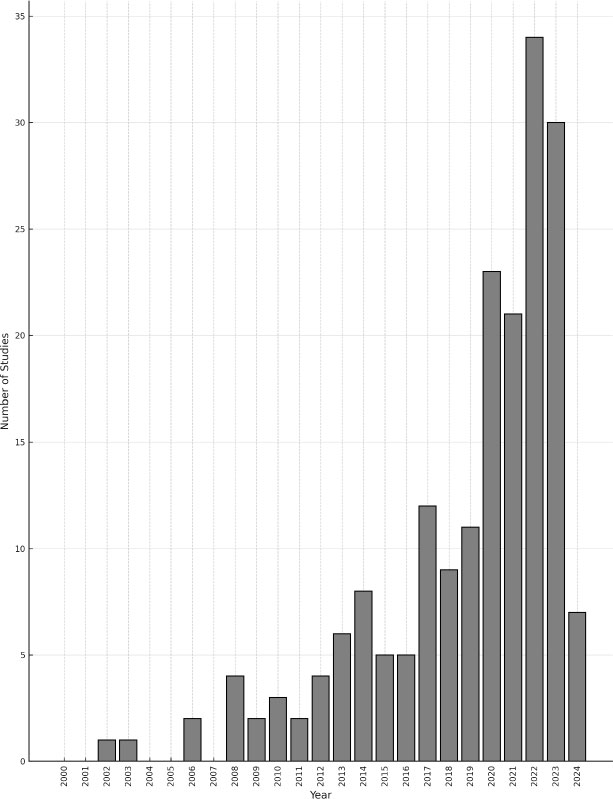
Annual publication trends in road rehabilitation (2000-2024).
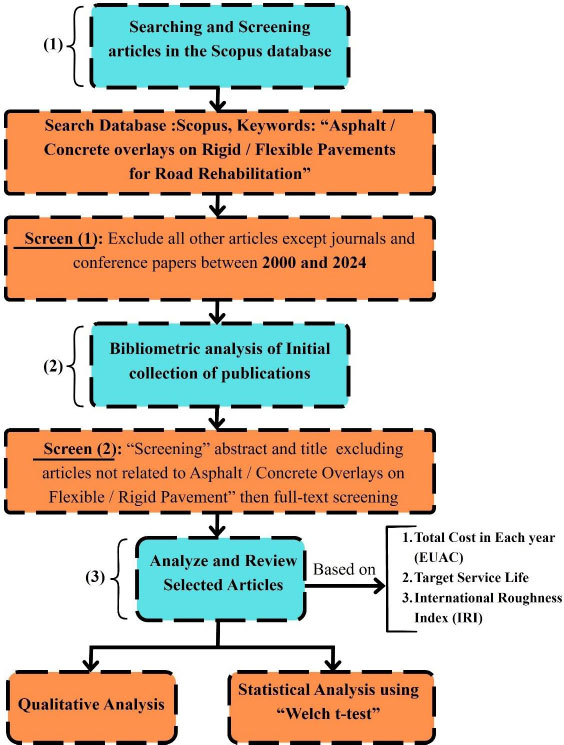
Steps of methodology.
The results of the VOSviewer co-occurrence analysis demonstrated six clusters in road rehabilitation based on the most frequently occurring keywords, as shown in Fig. (3). The clusters reflected the current focus of road rehabilitation research and included pavement (11 keywords), asphalt (9 keywords), pavement performance (9 keywords), pavement design (8 keywords), concrete (7 keywords), and pavement structure (4 keywords). The pavement cluster included keywords such as budget control, cost-benefit analysis, costs, decision-making, environmental impact, life cycle analysis, optimization, pavement maintenance, and sensitivity analysis. The asphalt cluster contained keywords like asphalt mixture, asphalt pavement, cracks, fatigue of materials, finite element method, rutting, stiffness, and the United States. The pavement performance cluster included Artificial Neural Networks (ANN), deterioration, forecasting, highway engineering, international roughness index, jointed plain pavement, pavement management, and regression analysis. The pavement design cluster incorporated flexible pavement, hot mix asphalt, pavement overlays, pavement rehabilitation, Portland cement, Portland cement concrete, pavement design, and reinforced concrete. The concrete cluster comprised asphalt concrete, concrete pavements, deflection, geological surveys, ground-penetrating radars, and nondestructive examination. Finally, the pavement structure cluster included asphalt overlay, concrete slabs, and testing. It was noted that asphalt and concrete were dominant factors in the clusters of co-occurrence keywords. While the co-occurrence clusters highlight core thematic areas, the minimum overlap between clusters suggests a fragmented research landscape with few integrating frameworks.
4.1.2. Co-authorship Network and Citation Counts
The co-authorship network and citation analysis offer a complementary perspective on the scholarly landscape of overlay-based rehabilitation for both flexible and rigid pavements. Figure 4 shows the collaborative network among authors who have published at least 3 papers with at least 40 citations each. The results revealed several small but closely connected clusters, along with numerous isolated nodes. Ceylan, Halil, and Gopalakrishnan form a central green cluster, indicating a strong collaborative relationship. Perez-Acebo, Heriberto, and Roji, Eduardo are part of a distinct yellow cluster, representing mutual co-authorship. A smaller red cluster, including Gao, Ying, Jia, Yanshun, and Wang, Jiashu, signals intra-group collaboration without external connections. Other researchers, such as Susan Tighe, Qiao Dong, and Boohyun Nam, are isolated nodes, exhibiting limited co-authorship within the dataset.
In contrast, Table 1 highlights the citation impact of the same set of authors, ranking them based on the number of documents and total citations. Perez-Acebo leads in both document count (5) and citations (162), followed closely by Celyan, Gopalakrishnan, and Tighe, each exceeding 100 citations. Interestingly, some authors with high citation counts appear peripherally or not at all in the co-authorship map, suggesting that citation influence does not necessarily correspond with network centrality. For example, Susan Tighe ranks among the top-cited authors but has no visible co-authorship connections in the network, indicating a more independent authorship trajectory. This divergence highlights the importance of integrating both visual and quantitative metrics to capture the degrees of scientific collaboration and its influence.
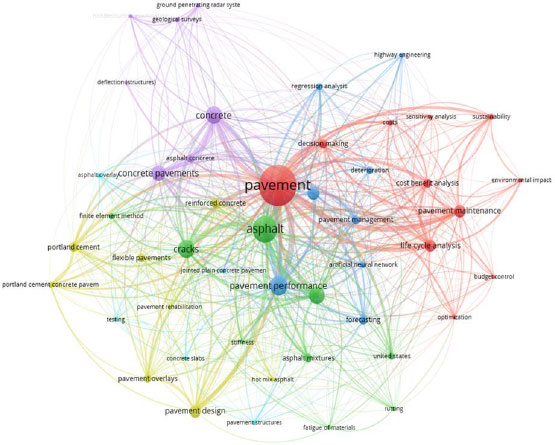
Keyword co-occurrence network of road rehabilitation studies.
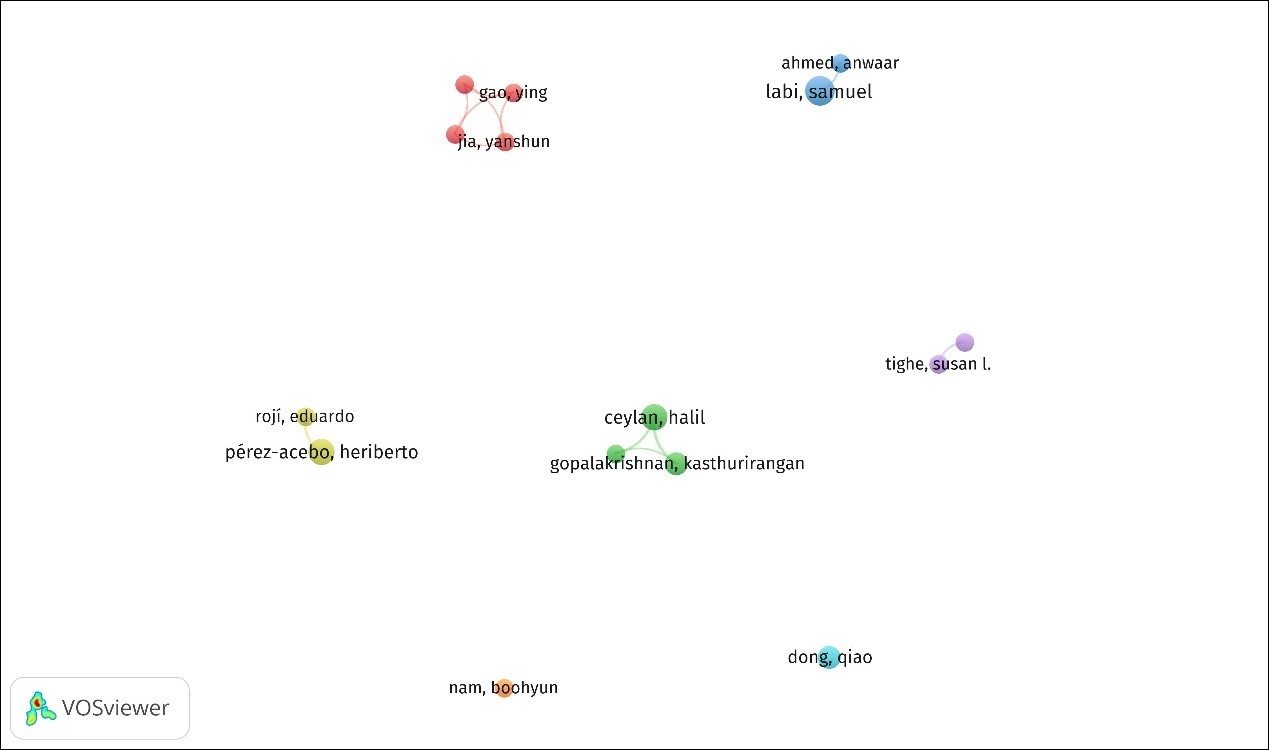
Author co-authorship network (≥3 documents, ≥40 citations).
| No. | Author | No. of Documents | Citation Counts | Total Link Strength |
|---|---|---|---|---|
| 1 | Perez-acebo, Heriberto | 5 | 162 | 3 |
| 2 | Roji, Eduardo | 3 | 151 | 3 |
| 3 | Celyan, Halil | 5 | 135 | 5 |
| 4 | Gopalakrishnan,Kasthurirangan | 4 | 132 | 4 |
| 5 | Torres-machi, Cristina | 3 | 110 | 3 |
| 6 | Labi, Samuel | 6 | 109 | 2 |
| 7 | Ahmed, Anwarr | 3 | 98 | 2 |
| 8 | Tighe, Susan | 6 | 113 | 3 |
| 9 | Nam, Boohyun | 3 | 60 | 0 |
| 10 | Gao, Ying | 3 | 51 | 3 |
| 11 | Jia, Yanshun | 3 | 51 | 3 |
| 12 | Wang, Jiashu | 3 | 51 | 3 |
| 13 | Zhou, Wei | 3 | 51 | 3 |
| 14 | Kim, Sunghwan | 3 | 46 | 3 |
| 15 | Dong, Qiao | 4 | 45 | 0 |
4.1.3. Country Co-authorship Network and Top Journals
Co-authorship among countries is essential, as this research highlights the international collaborative patterns among contributing nations in overlay-based rehabilitation for both flexible and rigid pavements. Figure 5 shows that the United States and China are the two prominent and active countries. The United States forms the most interconnected cluster, partnering with a variety of nations, including India, Turkey, South Korea, Spain, Chile, and Colombia. Meanwhile, China occupies a central position within its own cluster, with strong co-authorship links to Canada, Iran, and Egypt. This spatial separation of clusters, along with color-coded linkage, reflects diverse regional research alliances.
| Journal Name | Publisher | Number of Documents |
|---|---|---|
| International Journal of Pavement Engineering | Taylor and Francis | 20 |
| Construction and Building Materials | Elsevier | 15 |
| Journal of Transportation Engineering, Part B: Pavements | American Society of Civil Engineers (ASCE) | 12 |
| Transportation Research Record | SAGE | 8 |
| Transportation Research Record | National Research Council | 7 |
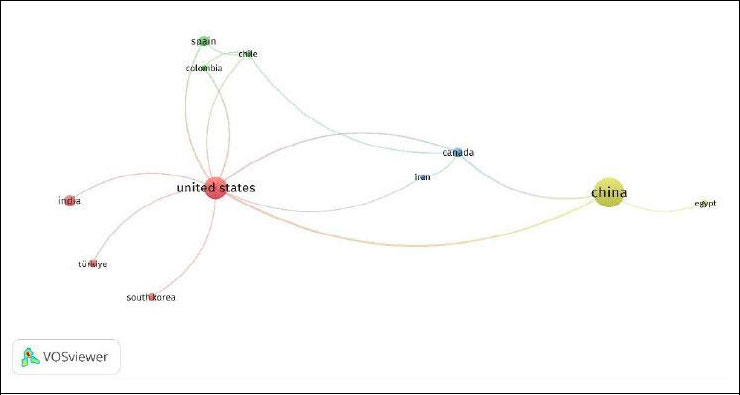
International co-authorship network by country.
While examining collaboration patterns among contributing countries is essential, it is equally crucial to identify primary journals and publishers in the field. Table 2 presents the most frequently used journals, with the International Journal of Pavement Engineering and Construction and Building Materials and Journal of Transportation Engineering, Part B: Pavements ranking highest in the number of documents. Next was the Transportation Research Record journal, which was transferred from the National Research Council to SAGE Publications.
Besides the structural overview provided by co-occurrence keywords and the journal network, further analysis uncovers gaps in key research areas. Initially, the authors and countries are shown in isolation, despite high citation numbers indicating limited cross-regional collaboration. Keyword co-occurrence also reveals minimal overlap between thematic keywords, indicating that clusters are relatively independent. These findings reveal opportunities to link the clusters, promote greater collaboration among countries, and develop more unified approaches to pavement research.
4.2. Flexible Pavement
Flexible pavement is a universal method for providing a safe, smooth, and stable road. It is usually used in city, interstate, and airfield runways subject to heavy wheel loads [46]. Using the point of contact in the granular structure, flexible pavement regularly distributes wheel load stresses to the lower layers, as shown in Fig. (6). However, wheel load stress decreases with depth when the overlay is spread over a wider pavement area. Asphalt and concrete overlays are commonly used methods to rehabilitate and extend the life of flexible pavements. Asphalt overlays apply a new asphalt layer over the existing pavement. They primarily incorporate Hot Mix Asphalt (HMA), Thin HMA, ultra-thin HMA, Cold In-Place Recycling (CIR), and mill-and-fill overlays. HMA overlays consist of a mixture of asphalt binder and graded aggregate, with a range of coarse and fine particles [47]. Thin HMA and ultra-thin HMA overlays typically range from ¾ to 1 ½ inches and from ½ to ¾ inches thick, respectively, involving the application of a fresh layer of asphalt over existing pavement [48]. Meanwhile, CIR overlays usually mill the existing asphalt pavement, then process it and layer it back down continuously at ambient temperature to reduce energy consumption and emissions [22]. On the other hand, mill-and-fill overlays involve removing the top layer of the existing asphalt pavement and applying a new layer of asphalt. This method is commonly used for roads with mild to moderate deterioration [36]. Other research has focused on using specific timing of infrastructure interventions, which yields more favorable outcomes in pavement performance compared to standalone approaches in terms of surface roughness and long-term policy implications, as cited in Qiao et al. (2021) [49]
Concrete overlays provide enduring surfaces that can enhance the performance and longevity of existing pavement. They mostly use Portland Cement Concrete (PCC), which improves the durability and strength of the existing pavement [50, 51]. Sometimes, PCC can be established with dowel bars to transfer vehicle loads across joints, reducing stress and preventing uneven settlement. Dowelled PCC is usually placed at transverse contraction joints in jointed plain pavements [26]. Sometimes, concrete overlays can be added based on their attachment to existing pavement. For example, a bonded overlay is directly attached to the existing surface. Another example is an unbonded overlay, which involves placing a layer of asphalt or another material between the existing pavement and the concrete overlay, without attaching it to the existing pavement.
Table 3 presents studies conducted on road rehabilitation using flexible pavements with asphalt and concrete overlays between 2000 and 2024, based on EUAC, target service life, and IRI. Since the studies reported varying service lives, their costs were converted into equivalent uniform annual costs (EUAC) to facilitate better interpretation of life-cycle costs [49]. A few studies employed concrete overlays [26, 47, 50, 51], whereas the remaining studies utilized asphalt overlays [12-14, 16, 22, 25, 35, 36, 49, 52-56].
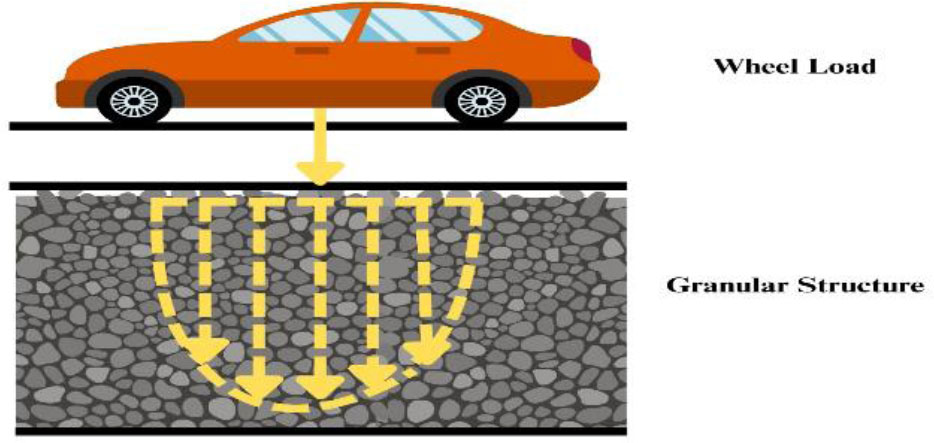
Load distribution mechanism in flexible pavement layers.
| No. | Reference | Type of Overlay | Overlay Thickness (mm) | EUAC ($ per lane/km) | Target Service Life (years) | IRI (m/Km) |
Notes |
|---|---|---|---|---|---|---|---|
| 1 | [12] | Asphalt | 145 | N/A | 20 | N/A | |
| 2 | [16] | Asphalt | 100:130 | N/A | 15 | N/A | |
| 120:150 | N/A | 11 | N/A | ||||
| 120:150 | N/A | 13 | N/A | ||||
| 120:150 | N/A | 17 | N/A | ||||
| 3 | [13] | Asphalt | 152 | N/A | 15 | N/A | |
| 4 | [25] | Asphalt | 230 | N/A | >30 | N/A | |
| 325 | N/A | N/A | N/A | ||||
| 5 | [26] | Concrete | 205 | 16450 | 13:23 | N/A | |
| 6 | [50] | Concrete | 50: 100 | N/A | 15:20 | N/A | |
| 7 | [14] | Asphalt | 100 | N/A | N/A | N/A | |
| 8 | [35] | Asphalt | 100:170 | N/A | N/A | N/A | |
| 9 | [36] | Asphalt | 50.8 | N/A | 5:9 | 0.90 | |
| 50.8 | N/A | 5: 9 | |||||
| 152.4 | N/A | 10: 12 | |||||
| 152.4 | N/A | N/A | |||||
| 10 | [52] | Asphalt | 50:125 | N/A | N/A | N/A | |
| 50:125 | N/A | N/A | N/A | ||||
| 11 | [47] | Asphalt | 100 | N/A | >15 | N/A | 61 Avenue to 50 Avenue – Northbound Lanes |
| Asphalt | 100 | N/A | 12: 15 | N/A | 61 Avenue to 50 Avenue – Southbound Lanes | ||
| Asphalt | 100 | 90,242 | - | N/A | 50 Avenue to Peigan Trail – Northbound and Southbound Lanes | ||
| Asphalt | 300 | 111,520 | >20 | N/A | |||
| Asphalt | 250 | 119,089 | 15 | N/A | |||
| Concrete | 250 | 201,845 | 30 | N/A | |||
| 12 | [53] | Asphalt | 152 | 235565 | 10 | 0.95 | |
| 13 | [54] | Asphalt | 305 | 105182 | 50 | N/A | No RBL (Rich Binder Layer) in New Mexico simulation for 50 years |
| 406 | 150913 | 50 | N/A | RBL included | |||
| 14 | [55] | Asphalt | 50.8 | N/A | 10 | 0.97 | Route 502 |
| 127 | N/A | 21 | 0.96 | Route 503 | |||
| 127 | N/A | 26 | 0.89 | Route 504 | |||
| 50.8 | N/A | 17 | 0.94 | Route 505 | |||
| 50.8 | N/A | 20 | 1.12 | Route 506 | |||
| 127 | N/A | 25 | 0.82 | Route 507 | |||
| 127 | N/A | 27 | 1.15 | Route 508 | |||
| 50.8 | N/A | 14 | 1.05 | Route 509 | |||
| 15 | [51] | Concrete | 50:100 | N/A | 13.5 | 2.56 | US 167 |
| N/A | 9.4 | 1.3 | US65 | ||||
| N/A | 10.2 | 1.8 | US90 | ||||
| 16 | [48] | Asphalt | 36 | 77,090 | 5 | N/A | |
| 52 | 86,568 | 10 | N/A | ||||
| 62 | 106,548 | 15 | N/A | ||||
| 71 | 142,863 | 20 | N/A | ||||
| 17 | [22] | Asphalt | N/A | N/A | 3 | 1.4:2.6 | US-280 near Opelika, Alabama |
| 18 | [56] | Asphalt | N/A | 44,333 | 5 | N/A | RHD 2002 |
| 60 | 95,080 | N/A | N/A | RHD 2015 | |||
| 19 | [49] | Asphalt | N/A | N/A | 60 | N/A |
4.3. Rigid Pavement
Rigid pavement is a method of rehabilitating roads. It usually depends on cement concrete. The term “rigid” refers to the strength and longevity of pavement, which can sustain heavy loads and transfer them over a wider area, as shown in Fig. (7). In other words, the concrete slab evenly distributes vehicle loads across its surface, rather than concentrating them at a single point. Prior studies have highlighted various approaches to pavement rehabilitation and overlay systems, emphasizing sustainable concrete solutions, structural performance, and cost-effectiveness across different materials and intervention strategies [57-59]. Due to their firm and durable characteristics, rigid pavements are particularly suitable for highways, airports, and industrial areas [30, 60, 61].
Similar to flexible pavements, asphalt and concrete overlays are frequently applied using various techniques, materials, and designs to extend the service life of rigid pavements. Table 4 presents studies on the rehabilitation of rigid pavements from 2000 to 2024, considering EUAC, target service life, and IRI. These studies offer diverse perspectives on the use of asphalt versus concrete overlays. Several investigations have focused on the life-cycle cost aspects of road rehabilitation [32, 53, 56, 59, 60], while others explored the incorporation of new overlay materials into existing overlays to enhance overall longevity and efficiency [60-64]. A few researchers employed IRI as a key performance index to evaluate the ride quality of pavement surfaces [19, 53, 59, 61-63]. Using IRI, they quantified the smoothness and comfort experienced by drivers, providing a standardized measure for comparing the effectiveness of different overlay materials and rehabilitation techniques. In addition to material and design considerations, operational efficiency factors play a vital role in the success of rehabilitation projects as reported in Wani and Gharaibeh (2012) and Sonmez (2007) [65, 66].
4.4. Critical Review of Previous Studies
Modern road rehabilitation techniques can greatly benefit society by improving road safety, facilitating the movement of goods and services on well-maintained roads, and promoting social connectivity by reducing travel time and vehicle maintenance costs. The literature synthesis for this article has been conducted over the past 24 years. This section critically reviews 34 selected studies that report performance metrics related to pavement overlays, specifically asphalt/concrete overlays on flexible/rigid pavements. Among these papers, there are 62 case studies. The literature revealed that asphalt overlays on the flexible pavement were the most commonly used road rehabilitation overlays. In contrast, concrete overlays on rigid pavement were the least frequently employed method, as shown in Fig. (8). It also showed that asphalt overlays on flexible pavement outperform concrete overlays in terms of usage. Meanwhile, asphalt overlays on rigid pavement are slightly more prevalent than concrete overlays. The number of papers with more than one overlay case study has also increased in the last five years.
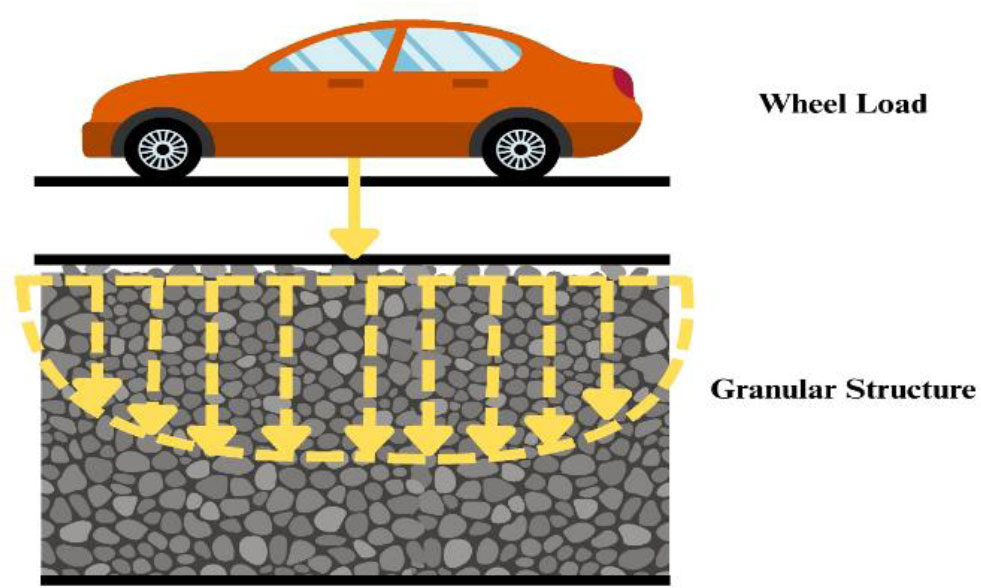
Load distribution mechanism in rigid pavement layers.
| No. | Reference | Type of Overlay | Overlay Thickness (mm) | EUAC ($ per lane/km) |
Target Service Life (years) | IRI (m/Km) |
Note |
|---|---|---|---|---|---|---|---|
| 1 | [27] | Concrete | N/A | N/A | N/A | N/A | |
| Concrete | N/A | N/A | N/A | N/A | |||
| 2 | [57] | Concrete | N/A | N/A | N/A | N/A | |
| 3 | [58] | Asphalt | 107 | N/A | N/A | N/A | |
| Asphalt | 107 | N/A | N/A | N/A | |||
| 4 | [28] | Asphalt | 130:200 | N/A | 15 | N/A | Huchinping Highway |
| Asphalt | 200: 250 | N/A | 20 | N/A | Kimshan Broadway | ||
| 5 | [64] | Concrete | N/A | N/A | N/A | N/A | |
| 6 | [61] | Asphalt | 101: 292 | N/A | N/A | 1.09 | |
| 101: 284 | N/A | N/A | 1.09 | ||||
| 94: 205.7 | N/A | N/A | 0.76 | ||||
| 7 | [60] | Concrete | 175 | 22149 | 20 | N/A | |
| Concrete | 100 | 16315 | <= 40 | N/A | |||
| Asphalt | 190 | 22763 | 20 | N/A | |||
| 8 | [62] | Asphalt | 75 | N/A | N/A | 1.18 | Road SH225 |
| Concrete | 200 | N/A | N/A | 1.16 | Road US96 | ||
| Asphalt | 113 | N/A | N/A | 0.96 | Road SH12 | ||
| Asphalt | 25 | N/A | N/A | N/A | Road SH342 | ||
| Asphalt | 75 | N/A | N/A | N/A | Road IH35W | ||
| 9 | [53] | Concrete | N/A | 78006 | 8 | 1.12 | |
| Concrete | N/A | 92858 | 12 | 0.98 | |||
| 10 | [59] | Asphalt | 51 | 28180 | 26 | 0.954 | Road 603 |
| Asphalt | 102 | 32890 | 23 | 0.96 | Road 604 | ||
| Asphalt | 102 | 348960 | 29 | 0.975 | Road 606 | ||
| Asphalt | 102 | 22390 | 27 | 0.964 | Road 607 | ||
| Asphalt | 203 | 25090 | 30 | 0.974 | Road 608 | ||
| 11 | [56] | Concrete | 300 | 19975 | 20 | N/A | RHD 2002 |
| Concrete | 47205 | N/A | RHD 2015 | ||||
| 12 | [63] | Concrete | N/A | N/A | N/A | 1.062 | |
| 13 | [49] | Concrete | N/A | N/A | 60 | N/A | |
| 14 | [19] | Asphalt | N/A | N/A | 10 | 3.59 | |
| 15 | [32] | Asphalt | N/A | 12191 | 5.5 | N/A | Korea Expressway (14.7 Km) |
| Concrete | N/A | 16178 | 11 | N/A |
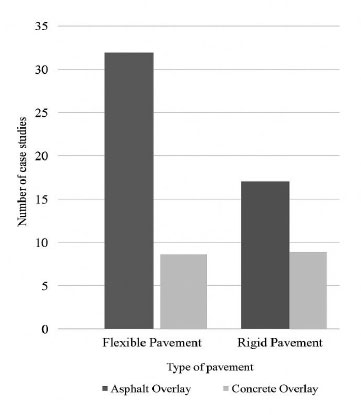
Flexible and rigid pavement overlays case studies.
Furthermore, most studies have concentrated on integrating life cycle costs and service life parameters, yet they often overlooked the crucial IRI parameter that deserves attention. Only two studies were performed based on the three primary parameters (EUAC, target service life, and IRI) [53, 59]. These studies used Asphalt Concrete (AC) overlays or Portland Cement Concrete (PCC) overlays to rehabilitate rigid pavements. Additionally, they examined the efficacy and performance outcomes of these treatments under various conditions and timeframes. While studies have focused on traditional asphalt and concrete overlays, recent research has explored advanced sustainable materials, including rubber-modified asphalt with stress-absorbing membrane interlayers [67], recycled rubber and tire fabric fibers [68], and tire-derived aggregate subgrades to enhance structural performance [69]. Another innovative research used the cathode-ray-tube glass powder in asphalt mixtures, offering promising results for stiffness enhancement, but such material innovations remain underrepresented in comparative overlay evaluations [70].
Therefore, future research should prioritize rigid pavement and its treatment overlays. This approach could provide deeper insight into improving the durability and effectiveness of rigid pavement rehabilitation techniques, as it would allow for a more thorough discussion of key parameters and the inclusion of additional parameters. In addition, a more balanced distribution of studies would guarantee an in-depth understanding of the pavement treatment research field.
4.5. Statistical Analysis using the Welch t-test
A Welch t-test is a statistical test used to evaluate whether there is a significant difference between the means of two groups, especially when the variances of the two groups are unequal. It is an extension of the standard t-test and is more commonly used when dealing with different variances and unequal sample sizes [71]. However, this research employed the Welch t-test as an inferential tool because the sample sizes of asphalt and concrete overlays for flexible and rigid pavements are unequal, based on three key parameters addressed earlier in this research. Degrees of freedom were also computed using the Welch-Satterthwaite approximation, which produces non-integer df values.
The Welch t-test was conducted for the flexible pavement with a null hypothesis that there is no difference between the asphalt and concrete overlays. Table 5 shows the results of Welch's t-test, where the columns present parameter name, t-value, degree of freedom df, and p-value with 95% confidence. Table 5 also showed that there was no statistically significant difference between asphalt and concrete overlays in terms of EUAC [Welch's t-test (1.045) = 0.049, p = 0.484], target service life [t(10.01) = 0.167, p = 0.435], or IRI [t (2.19) = -2.281, p = 0.930]. Figure 9 demonstrates the results of key parameters on the flexible pavement using comparative box plots and violin plots. Figure 9A and B show that concrete overlays exhibit higher and more consistent costs and target service life values, whereas asphalt overlays display greater variability and generally lower costs and service life. Figure 9C further shows that asphalt overlays have lower IRI values, whereas concrete overlays have higher IRI values, suggesting a rougher ride.
Although asphalt overlays offer a cost advantage in flexible pavements, the variation in expected service life highlights inconsistency in long-term performance. While IRI values indicate improved ride quality, the broader range of results suggests potential differences under diverse conditions. These findings underscore the importance of thoroughly evaluating each site when choosing overlay types.
Furthermore, as with flexible pavements, the Welch t-test was performed on rigid pavements with the same null hypothesis. Table 6 also showed that there was no statistically significant difference between asphalt and concrete overlays in terms of EUAC [Welch's t-test (6.68) = 1.316, p = 0.884], target service life [t(9.43) = -0.493, p = 0.683], or IRI [t(2.19) = -2.281, p = 0.930]. Figure 10 presents the comparative performance of asphalt and concrete overlays on rigid pavement across key parameters. Figure 10A shows that asphalt overlays are generally more cost-effective, with EUAC values ranging from $20 to $40 per lane-kilometer, whereas concrete overlays have higher EUAC values ranging from $80 to $110. Figure 10B demonstrates that asphalt overlays have a substantially more extended service life range (approximately 20 to 35 years) than concrete overlays (approximately 5 to 15 years). Regarding ride quality, Figure 10C shows that asphalt overlays show a narrower range with lower values, indicating better ride quality, whereas concrete overlays demonstrate a wider range with higher values, suggesting a rougher surface.
| Parameter | t | df | P |
|---|---|---|---|
| EUAC ($ per lane/Km) per thousand | 0.049 | 1.045 | 0.484 |
| Target Service Life | 0.167 | 10.006 | 0.435 |
| IRI (m/Km) | -2.281 | 2.187 | 0.930 |
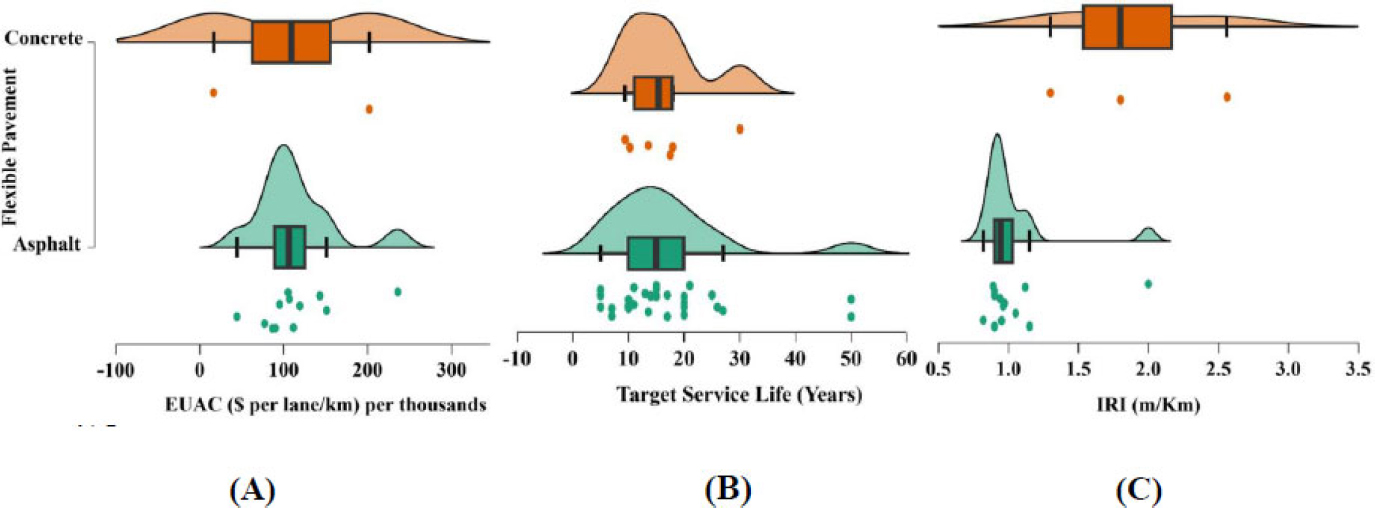
Welch's t-test comparisons of asphalt versus concrete overlays on flexible pavement.(A) Distribution of EUAC ($per lane/km) per thousand on flexible pavement; (B) Distribution of target service life (years) on flexible pavement; (C) Distribution of IRI (m/km) on flexible pavement.
Note: green bars represent asphalt overlays; orange bars represent concrete overlays.
| Parameter | t | df | P |
|---|---|---|---|
| EUAC ($ per lane/Km) per thousand | -1.316 | 6.676 | 0.884 |
| Target Service Life | -0.493 | 9.429 | 0.683 |
| IRI (m/Km) | 0.563 | 12.158 | 0.292 |
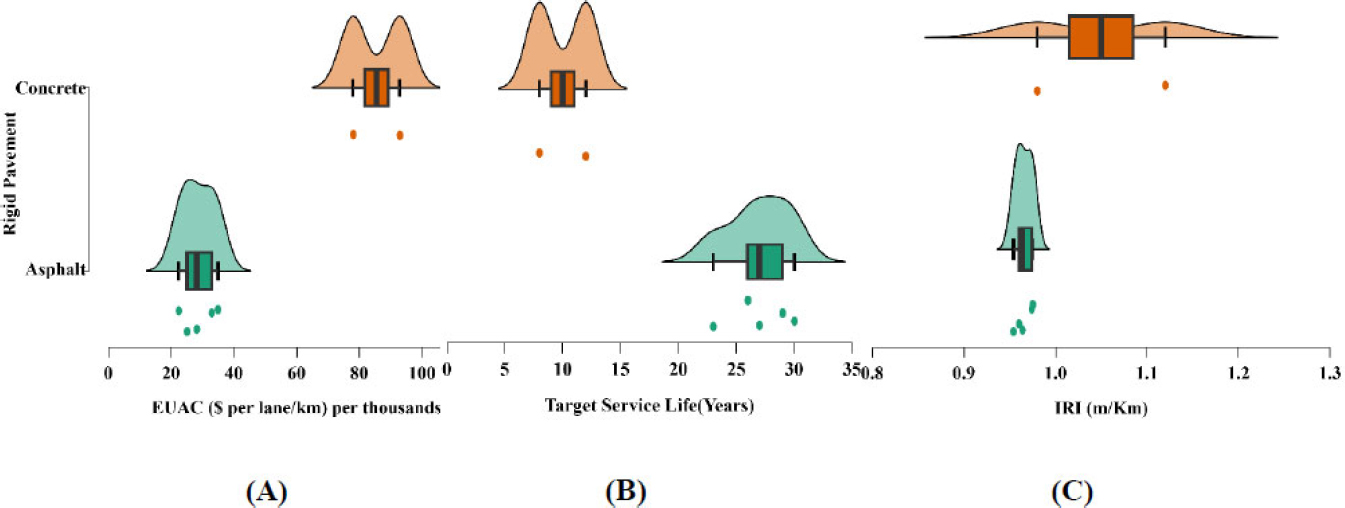
Welch's t-test Results of Asphalt versus concrete overlays on rigid pavement.(A) Distribution of EUAC ($per lane/km)per thousand on rigid pavement. (B) Distribution of target service life (years) on rigid pavement. (C) Distribution of IRI(m/km) on rigid pavement.
Note: green bars represent asphalt overlays; orange bars represent concrete overlays.
| Parameter | t | df | P |
|---|---|---|---|
| EUAC ($ per lane/Km) per thousand | 4.810 | 17.414 | <0.001 |
| Target Service Life | -1.448 | 28.642 | 0.921 |
| IRI (m/Km) | -0.024 | 25.077 | 0.509 |
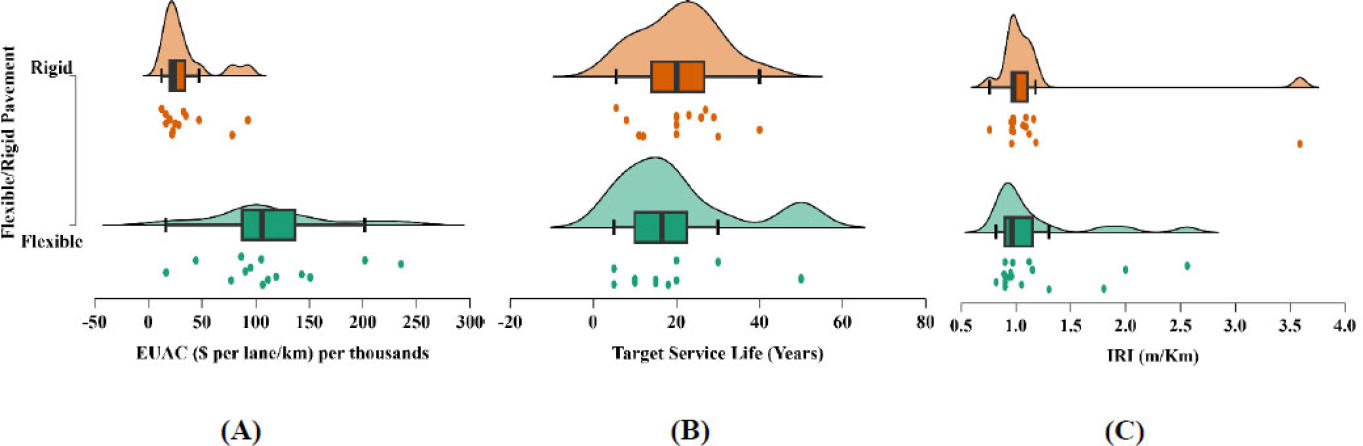
Welch's t-test results comparing flexible versus rigid pavement systems. (A) Distribution of EUAC ($per lane/km) per thousand for flexible vs. rigid pavement. (B) Distribution of target service life (years) for flexible vs. rigid pavement. (C) Distribution of IRI (m/km) for flexible vs. rigid pavement.
Note: green bars represent flexible pavements; orange bars represent rigid pavements.
In rigid pavement overlays, asphalt overlays appear more cost-effective and offer better ride quality. However, the wider variation in target service life for asphalt overlays may indicate sensitivity to environmental factors and differences in construction quality. Concrete overlays, although more costly, exhibit a narrower performance range and more consistent durability. This emphasizes a common trade-off between cost efficiency and predictability regarding target service life and IRI, which should be considered during the design process.
Finally, Welch's t-test was employed to determine whether there is a significant difference between the flexible and rigid pavement based on the key parameters discussed earlier in the paper. Table 7 showed that there was a statistically significant difference in EUAC between flexible and rigid overlays [t(17.41) = 4.810, p <0.001]. In contrast, no significant differences were found in target service life [t(28.64) = -1.448, p = 0.921] or IRI [t(25.08) = - 0.024, p = 0.509]. Figure 11 presents the comparative performance of flexible and rigid pavement systems based on key parameters extracted from case studies. Figure 11A highlights that although both pavement types share a similar median EUAC, flexible pavements offer a broader cost range. This implies that flexible pavements can be more cost-effective in specific contexts. The wide EUAC spread may be attributed to project-specific factors such as subgrade conditions or geographic location. As shown in Figure 11B, rigid pavements have a higher median service life but a more concentrated distribution. Conversely, the flexible pavement shows greater variability and a broader range of service life. Regarding surface quality, Figure 11C shows that both pavement types have comparable median IRI of approximately 1 m/km; however, rigid pavements display greater variability with several high-value outliers reaching 4 m/km. Meanwhile, flexible pavements exhibit a more uniform distribution, with fewer outliers, suggesting better, more consistent ride quality. It is essential to note that the statistical analysis conducted here is exploratory and reflects the limitations of a small, heterogeneous sample across the selected studies.
When comparing flexible and rigid pavement systems, significant variations exist in both cost and ride quality. This variability allows for design flexibility but can introduce unpredictability in long-term performance. In contrast, rigid pavements offer more predictable outcomes, albeit with higher initial costs. Therefore, the selection of pavement type should not rely solely on average results, such as cost or performance. Other factors, including the acceptable level of project risk, expected traffic loads, and long-term maintenance strategies, must also be considered.
These findings have direct implications for pavement design and management decisions. For example, although asphalt overlays demonstrated a statistically significant advantage in EUAC for flexible pavement systems, this cost benefit must be weighed against potential differences in service life and ride quality. While variations in target service life were not statistically significant, they still affect long-term maintenance planning and overall life-cycle costs. Additionally, differences in IRI directly influence user comfort and safety, emphasizing ride quality as a critical factor in overlay selection. Overall, these results underscore the need to consider cost, desired service life, and service quality, particularly in settings with limited infrastructure resources.
CONCLUSION
This study presents an analysis of the rehabilitation of both flexible and rigid pavements. Asphalt and concrete overlays from 2000 to 2024. The literature review was initially subjected to bibliometric analysis to identify trends and key contributions in road rehabilitation. After thorough scanning, thirty-four studies were refined based on the literature, using three key parameters: EUAC, target service life, and IRI. Qualitative and statistical analyses were conducted on the refined literature. The qualitative analysis showed a lack of studies on rigid pavement overlays. Welch's t-test showed no significant difference in the key parameters for flexible and rigid pavement overlays (asphalt and concrete). Nonetheless, the EUAC parameter significantly favored flexible pavement, whereas other parameters showed no significant difference. Based on these findings, it is recommended that future applications focus more on rigid pavement and its overlays. In addition to these findings, this review identified several critical research gaps. First, rigid pavement overlays remain underexplored. Secondly, IRI is also underreported in comparative studies. Moreover, the bibliometric analysis revealed a fragmented research landscape with minimal thematic overlap between clusters, weak co-authorship networks, and limited international collaboration. These limitations suggest the need for more integrated, interdisciplinary, and globally connected research efforts in future pavement rehabilitation studies. Additionally, future research should also explore alternative approaches, such as stabilization or reconstruction, that utilize recycled or eco-friendly materials.
AUTHORS’ CONTRIBUTIONS
The authors confirm contribution to the paper as follows: E.S., A.R. and E.Q.: Study conception and design; E.S., A.R. and E.Q.: Data collection; E.S., A.R. and E.Q.: Analysis and interpretation of results; E.S., A.R., E.Q., A.I., E.H., A.M.A. and A.A.E.: Draft manuscript preparation contributed through supervision, guidance, and critical review. All authors reviewed the results and approved the final version of the manuscript.
LIST OF ABBREVIATIONS
| AC | = Asphalt Concrete |
| AEC | = Architecture, Engineering, and Construction |
| ANN | = Artificial Neural Network |
| CIR | = Cold In-Place Recycling |
| EUAC | = Equivalent Uniform Annual Cost |
| HMA | = Hot Mix Asphalt |
| IRI | = International Roughness Index |
| PCC | = Portland Cement Concrete |
| PMS | = Pavement Management System |
| RBLASA | = Rich Binder Layer acrylonitrile styrene acrylate |
ACKNOWLEDGEMENTS
Declared none.